

You step out of the shower and see it again. The glass looks foggy. White spots cover the lower half of the door. You wiped it last weekend, and the cloudy film is already back.
Most people reach for the nearest scrub pad at this point. That is the move that causes real damage. A rough tool can leave fine scratches in glass. Those scratches trap more minerals, and the door gets cloudy faster than before.
The good news is that hard water stains respond well to gentle methods. You need the right product, a soft cloth, and some patience. This guide shows you why the spots form, which methods are safe, and which tools to put away. You will also get a simple prevention routine that keeps the glass clear between cleanings.

Why Hard Water Leaves White Spots on Glass
Water is rarely just water. It carries dissolved minerals picked up from soil and rock. Calcium and magnesium are the two main ones. Water with a high amount of these minerals is called hard water.
The U.S. Geological Survey explains that water hardness depends mostly on the calcium and magnesium dissolved in it. It also shows how hardness is measured. Water under 60 milligrams per liter counts as soft. Water above 180 counts as very hard.
Here is what happens on your shower door:
- Water sprays onto the glass.
- Droplets cling to the surface and slowly dry.
- The water evaporates. The minerals stay behind.
- Each shower adds another thin layer.
One shower leaves a faint spot. Fifty showers leave a crust.
Why Hard Water Deposits Become More Difficult to Remove
Fresh spots sit loosely on the glass. A damp cloth can lift many of them. Older deposits bond to the surface. They harden, stack up, and turn cloudy.
Soap scum makes this worse. Body wash, shampoo, and conditioner leave oily residue on glass. Minerals stick to that residue. The result is a film that looks gray or white and feels rough to the touch.
Factors That Increase Hard Water Staining
Water hardness varies from town to town. It can even change between neighborhoods in the same city. If you live in Connecticut or Massachusetts, your local water utility publishes a yearly water quality report. Look for the hardness number. Homes on private wells often have different levels, so a simple test kit can help.
Other factors matter too:
- Hot water dries faster and leaves more residue.
- Poor ventilation keeps the glass wet longer.
- Frameless doors with large flat panels show every spot.
- Older glass with tiny surface flaws holds deposits more easily.
Hard Water Stains vs. Soap Scum vs. Etching
Before you pick a cleaner, check what you are dealing with. Each problem needs a different approach.
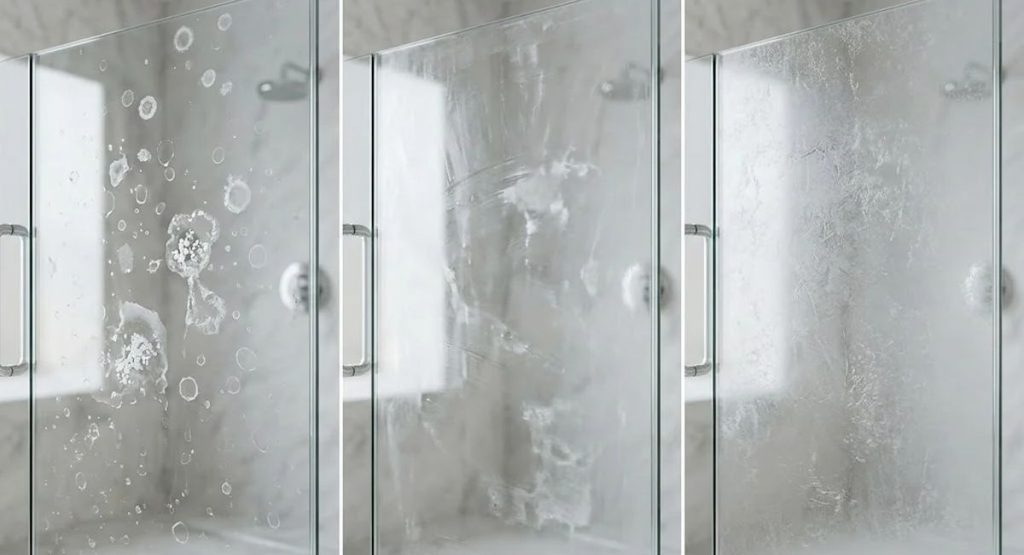
Hard water stains
These look like white or gray dots and rings. They often form in droplet patterns. They feel slightly rough. Acidic cleaners dissolve them well.
Soap scum
This looks like a cloudy, waxy film. It feels slick or greasy. It often sits on the lower half of the door, where water runs down. A good degreaser or a dish soap solution works better here than acid.
Glass etching
Etching is permanent damage. It happens when minerals or acidic residue sit on glass for a long time and slowly eat into the surface. The glass looks frosted. The haze does not wipe off, even after careful cleaning.
Here is a quick test. Wet the glass with water. If the haze disappears while wet and returns as it dries, you likely have mineral buildup. If the haze stays visible when wet, etching is more likely. Polishing compounds made for glass may reduce mild etching, but severe cases often need glass replacement or professional restoration.
Essential Cleaning Supplies for Removing Hard Water Stains
You do not need special equipment. Most of this is already in your home.
- Microfiber cloths: They are soft, absorb well, and trap residue without scratching. Keep two or three clean ones ready.
- A spray bottle: Useful for even coverage.
- White vinegar: A mild acid that dissolves calcium deposits.
- Dish soap: Cuts through soap scum.
- Baking soda: A gentle abrasive for stubborn spots.
- A soft nylon brush or non-scratch pad: For textured areas and tracks.
- A squeegee: For finishing and for daily upkeep.
- Rubber gloves: Protect your skin.
- A towel or old rag: Lay it along the base of the door to catch drips.
Check your glass first
Not all shower glass is the same. Look for clues about what you own.
- Clear tempered glass is the most common. It handles the methods below well.
- Frosted or textured glass has a patterned surface. Use a soft brush so you reach the grooves.
- Coated glass has a factory or aftermarket protective layer that helps water bead and roll off. Brands vary, and so do their care rules. Check the manufacturer’s instructions before using acid or abrasives. Some coatings wear off if you use the wrong product.
If you are unsure, test any method on a small corner first.
Method 1: White Vinegar and Water Spray
This is the best starting point. It is cheap, safe for most clear glass, and effective on light to moderate buildup.
Steps
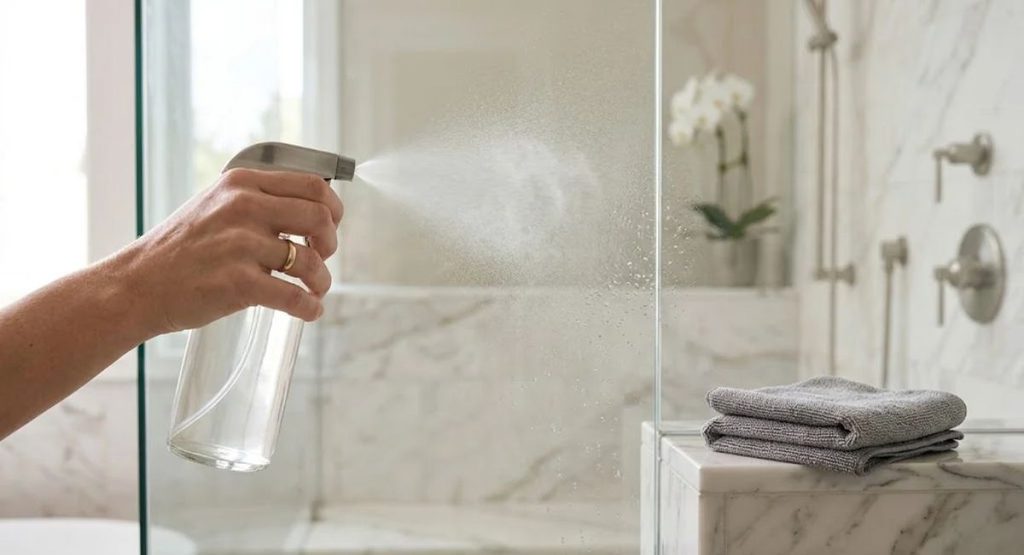
- Mix equal parts white vinegar and warm water in a spray bottle.
- Spray the glass until it is fully wet.
- Let it sit for 10 to 15 minutes. Respray if it starts to dry.
- Wipe with a damp microfiber cloth in circular motions.
- Rinse with clean water.
- Dry with a fresh microfiber cloth or squeegee.
Drying matters. If you skip it, new water spots form as the glass dries.
Tips for better results
- Warm the vinegar slightly. It works faster.
- Work in small sections on tall doors so the vinegar does not dry out.
- Use a paper towel soaked in vinegar and press it against heavy spots. This holds the acid in place longer on vertical glass.
What to protect while you work
Vinegar is gentle on glass, but it can affect nearby materials.
- Natural stone such as marble, travertine, or limestone can etch. Keep vinegar off stone shower floors and ledges.
- Rubber seals and gaskets may dry out with repeated exposure. Rinse them after each use.
- Some metal finishes like brass, oil-rubbed bronze, or brushed nickel can lose their shine. Wipe drips quickly.
Open a window or run the fan. The smell is strong.
Method 2: Baking Soda Paste for Stubborn Spots
Some spots survive vinegar. Baking soda adds mild friction without the harshness of scouring powders.
Steps
- Mix three parts baking soda with one part water to form a thick paste.
- Apply it to the stained area with a damp microfiber cloth or soft sponge.
- Rub gently in small circles. Use light pressure.
- Let the paste sit for five minutes.
- Rinse thoroughly with warm water.
- Spray with vinegar solution to remove any chalky residue.
- Dry with a clean cloth.
Baking soda is a mild abrasive. It is generally safe on uncoated clear glass, but light pressure is the rule. Do not use it on coated glass unless the manufacturer says it is fine.
Why the vinegar rinse helps
When baking soda meets vinegar, it fizzes. That reaction does not do much cleaning on its own. The real benefit is that the vinegar removes leftover baking soda film so the glass dries clear.
Method 3: Dish Soap and Vinegar for Soap Scum Plus Minerals
When glass has both soap scum and mineral buildup, a combined approach saves time.
Steps
- Warm half a cup of white vinegar in the microwave for 30 seconds.
- Pour it into a spray bottle.
- Add half a cup of blue dish soap, such as Dawn. Swirl gently to avoid foam.
- Spray the glass generously.
- Let it sit for 20 to 30 minutes.
- Scrub lightly with a non-scratch pad or soft brush.
- Rinse well and dry.
The dish soap loosens oils and scum. The vinegar dissolves minerals. Together they cover both problems. Store leftovers in a labeled bottle and use within a few weeks.
Method 4: Lemon Juice and Salt Alternatives
You may have seen lemon juice suggested online. It works on a similar principle as vinegar. Citric acid dissolves mineral deposits.
Lemon juice is a fine backup if you have no vinegar. It smells better. It can also be sticky, so rinse well. Do not add coarse salt to the glass. Salt crystals can scratch. Skip the salt and use the juice alone.
Method 5: Commercial Hard Water Removers
Some buildup is too thick for home remedies. Commercial limescale removers use stronger acids and can work faster.
How to use them safely
- Read the label first. Confirm it is safe for glass.
- Check if your glass has a coating. Many products warn against use on coated surfaces.
- Wear gloves and eye protection.
- Ventilate the bathroom well.
- Apply to a small test area first.
- Follow the contact time on the label. Do not leave it longer than directed.
- Rinse thoroughly with water.
- Dry the glass.
Why You Should Never Mix Cleaning Products
Never mix cleaning products. Do not combine bleach with vinegar, ammonia, or acidic cleaners. The mix can release toxic gases. Use one product at a time and rinse the surface between products.
When commercial removers make sense
Use them when vinegar and baking soda have not made a visible difference after two tries. Use them on doors that have not been cleaned in months. Avoid using them as a weekly cleaner. Repeated use of strong acids can damage seals, metal hardware, and some coatings.
Method 6: A Razor Scraper for Thick Crust (Use With Caution)
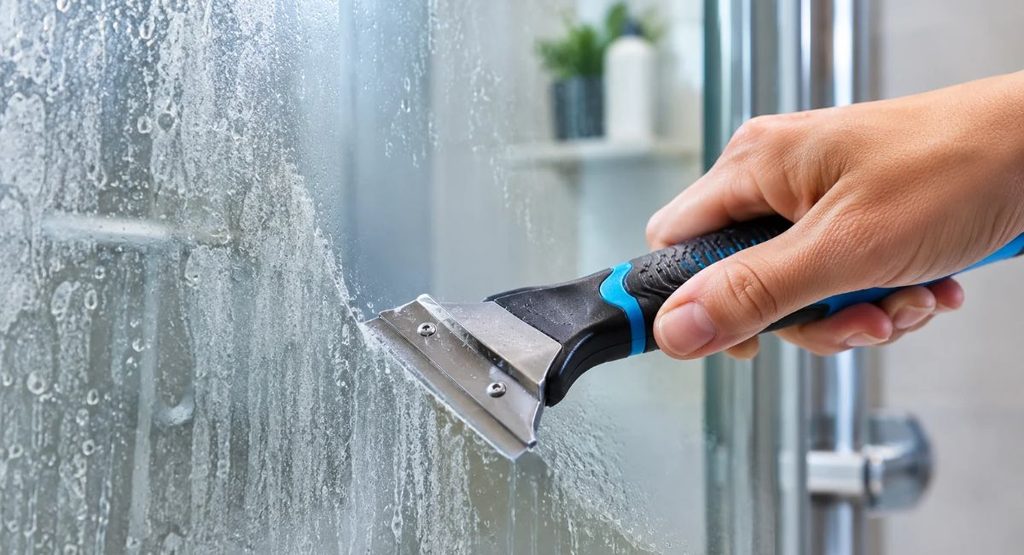
Some people use a single-edge razor blade scraper on very thick mineral crust. It can work. It can also scratch if you do it wrong.
Only use this method on clear, uncoated flat glass. Skip it on textured, frosted, or coated glass. Skip it on glass you cannot afford to damage.
Safer Technique :How to Use a Razor Scraper Safely on Glass
- Spray the glass with soapy water or vinegar solution so it stays wet.
- Use a new blade. A dull or nicked blade scratches.
- Hold the blade at a low angle, about 30 degrees.
- Push in one direction with light pressure. Do not scrub back and forth.
- Wipe the blade and the glass often to remove grit.
- Rinse and dry.
If you feel any grinding or hear scratching, stop. Switch back to softer methods.
What Not to Use on Glass Shower Doors
This section may save your door. Several common cleaning tools cause long-term damage.
Tools to avoid
- Steel wool: Even fine grades can leave scratches. It also sheds metal bits that rust.
- Scouring pads: Green abrasive pads are too rough for most glass surfaces.
- Scouring powders: They contain hard particles that scratch.
- Pumice stones: These can scratch glass and ruin coatings.
- Dry paper towels: They can leave lint and may drag grit across the surface.
- Old, gritty sponges: Trapped particles scratch like sandpaper.
Products to avoid or use with extreme care
- Magic erasers (melamine foam): These act like very fine sandpaper. They can dull coated glass. If you use one on uncoated glass, test a small area and use light pressure.
- Bleach: It does not remove mineral stains. It can also damage metal frames and seals.
- Ammonia-based cleaners: These can harm some coatings and should never be mixed with bleach.
- Hydrofluoric acid products: Some professional etching removers contain these. They are dangerous and should never be used at home.
- Oven cleaner: Too harsh, and it can damage glass and surrounding materials.
Comparing safe and risky choices
| Method | Works on mineral buildup | Scratch risk | Safe for coated glass |
| Vinegar and water spray | Yes, light to moderate | Very low | Check manufacturer first |
| Baking soda paste | Yes, stubborn spots | Low with light pressure | Usually no |
| Dish soap and vinegar mix | Yes, with soap scum | Very low | Often yes, test first |
| Commercial limescale remover | Yes, heavy buildup | Low | Often no, check label |
| Razor scraper | Yes, thick crust | Moderate to high | No |
| Steel wool or scouring pads | Partly | High | No |
A Full Cleaning Routine You Can Follow Today
Here is one clean flow that combines the safest methods. Use it for a door that has not been cleaned in a while.
Step 1: Prepare the space
Open a window or run the exhaust fan. Lay a towel at the base of the door. Put on gloves.
Step 2: Remove loose dirt
Rinse the glass with warm water. This clears surface soap and dust. Wipe with a damp microfiber cloth.
Step 3: Spray and soak
Spray the vinegar and water mix over the whole door. Wait 10 to 15 minutes. Keep the surface wet.
Step 4: Treat heavy spots
Apply baking soda paste to rough or cloudy patches. Rub gently. Rinse.
Step 5: Clean the frame and track
Use a soft brush and the dish soap and vinegar mix on the track. Use a cotton swab for corners. Mineral deposits build up here and trap water.
Step 6: Rinse and dry
Rinse the entire door with clean water. Squeegee from top to bottom. Wipe the edges and the track with a dry cloth.
Step 7: Check in sunlight or bright light
Look at the glass from a side angle. This reveals any spots you missed. Repeat on those areas if needed.
If you still see haze after two full rounds, you may be dealing with etching or deeply bonded buildup.
How to Clean Shower Door Tracks, Hinges, and Handles
The glass is only part of the problem. Metal hardware and tracks collect the same deposits.
- Tracks: Pour a small amount of vinegar into sliding door tracks. Let it sit. Scrub with an old toothbrush. Rinse and dry.
- Hinges and handles: Wipe with a damp microfiber cloth and mild soap. Avoid soaking finishes that are lacquered or coated.
- Rubber seals: Wipe with a damp cloth. Do not soak in vinegar.
- Drain holes: Clear them if they are blocked. Standing water adds to buildup.
Neglected hardware can discolor and corrode. Regular wiping keeps it in good shape.
How Protective Glass Coatings Work
Many homeowners ask about coatings. They can help, but they are not magic.
A coating is a thin layer applied to glass. It makes the surface smoother and more water repellent. Water beads and rolls off instead of clinging. This reduces how many minerals dry on the surface.
Types of Protective Shower Glass Coatings
- Factory coatings: Some doors come treated from the manufacturer. They are bonded to the glass.
- Professional coatings: Applied by trained installers. These tend to last longer.
- DIY sprays and wipes: Easy to apply, but they wear off sooner.
Care Rules: How to Maintain Protective Glass Coatings
- Use a pH-neutral cleaner or mild soap and water for routine cleaning.
- Avoid abrasives, razors, and harsh acids unless the maker says they are safe.
- Squeegee after showers as usual. A coating reduces spotting, but it does not remove the need for drying.
- Reapply DIY coatings on schedule, often every few months. Check the product label.
A coating can make cleaning easier. It does not replace a good routine.
Prevention: How to Keep Glass Clear Between Cleanings
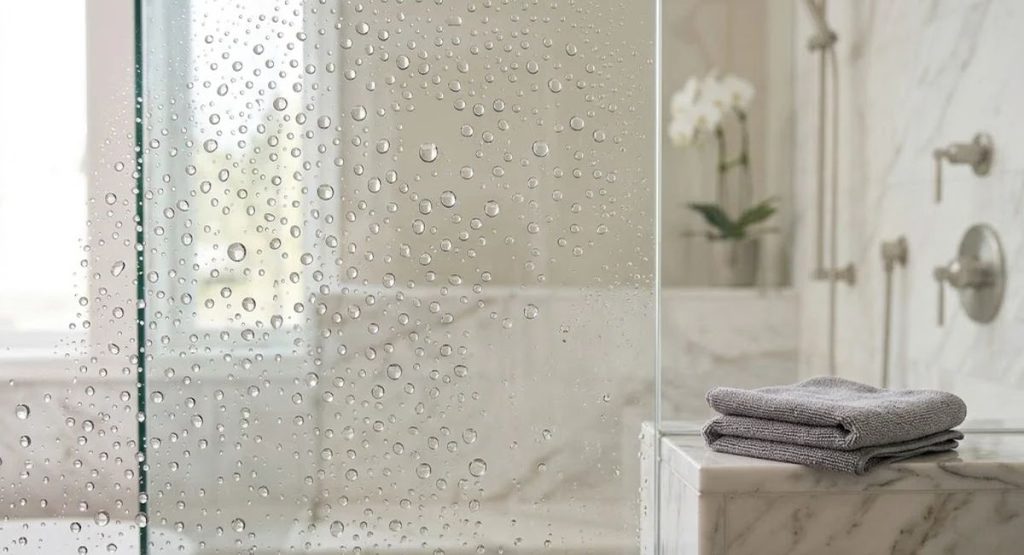
Prevention takes far less effort than repair. A few habits cut mineral buildup a lot.
Squeegee after every shower
This is the single best habit. Pull the squeegee from top to bottom. It takes 20 seconds. Water leaves the glass before it can dry.
Keep the squeegee on a hook inside the shower. If it is within reach, you will use it.
Dry with a microfiber cloth
If you do not have a squeegee, use a dry microfiber towel. Wipe the door and the track.
Run the exhaust fan
Moisture on glass dries faster with good airflow. Run the fan during the shower and for about 20 minutes after. Leave the door slightly open to let steam escape.
Use a daily shower spray
Daily shower sprays contain surfactants that help water sheet off the glass. Choose one that is safe for your glass type. You can also make a light vinegar and water mix for a quick spray after showers.
Wipe weekly with a mild cleaner
A quick weekly wipe stops film from building. Use warm water and a drop of dish soap on a microfiber cloth. Rinse and dry.
Consider a water softener or filter
A whole-house water softener removes calcium and magnesium before water reaches your fixtures. It lowers buildup across the home, including faucets and glass. Showerhead filters offer a smaller benefit. They may reduce some minerals and chlorine, but they do not soften water the way a full system does.
Talk to a licensed plumber or water treatment professional before choosing a system. Your water report can help guide that choice.
Choose better shower habits
- Turn down the water temperature slightly. Very hot water dries faster and can leave more residue.
- Rinse the door with cool water at the end of a shower.
- Keep bath products with heavy oils off the glass.
A Simple Maintenance Schedule
This table keeps the work small and steady.
| Frequency | Task | Time |
| After every shower | Squeegee the glass and wipe the track | 20 to 30 seconds |
| Weekly | Wipe with dish soap and water, rinse, dry | 5 minutes |
| Every two to four weeks | Vinegar spray treatment on glass and hardware | 15 minutes |
| Every three months | Full cleaning routine, track scrub, seal check | 30 to 45 minutes |
| As needed | Reapply a DIY coating if you use one | 10 minutes |
Hard water areas may need the monthly task every two weeks. Soft water areas can stretch it out. Watch the glass. It tells you when it needs attention.
If you want to see how this fits into a bigger plan, our guide on how often to clean each room covers the full home.
Common Mistakes to Avoid
Even careful people repeat a few errors.
Cleaning in direct sunlight or on a hot door
Heat dries cleaners too fast. Spots and streaks form. Clean when the glass is cool.
Letting vinegar dry on the glass
Dried vinegar leaves its own residue. Rinse and dry soon after treatment.
Using one cloth for everything
A cloth used on the toilet should never touch the shower door. Keep separate cloths and wash them often.
Washing microfiber with fabric softener
Fabric softener coats the fibers and reduces how well they absorb water. Wash microfiber with detergent only. Skip dryer sheets.
Scrubbing hard
If the stain does not budge, more pressure is not the answer. More contact time is. Let the product work, then wipe.
Ignoring the first signs
A few light spots are easy to remove. Waiting for a thick film makes the job longer and riskier for the glass.
How to Handle Etched or Permanently Cloudy Glass
If the haze stays after proper cleaning, the damage may be etching. This happens when minerals have bonded or when acidic residue has attacked the glass over time.
Ways to Restore or Replace Etched Shower Glass
- Glass polishing compound: Products made for glass can reduce mild etching. They are applied by hand or with a low-speed polisher. Follow directions closely.
- Professional glass restoration: Specialists use controlled polishing to remove the damaged layer. Results vary, and thick or deep etching may not be fully reversible.
- Replacement: If the glass is badly damaged, replacing the panel may be the most practical fix.
Once you restore or replace the glass, apply a protective coating and start a prevention routine. That helps new glass stay clear.
When to Hire Professional Shower Door Cleaning Services
Some situations go beyond a weekend cleaning session.
- The door has months or years of untouched buildup.
- You have several glass panels, tracks, and fixtures to restore.
- You are short on time, energy, or physical ability to scrub safely.
- You are preparing a home for sale, a move, or guests.
- You are not sure whether your glass has a coating.
A professional deep cleaning service in Hartford, CT and other araes across Connecticut and MA handles heavy bathroom buildup using methods matched to the glass and fixtures. It can reset the bathroom so your weekly routine starts from a clean baseline. If you prefer steady upkeep over occasional big jobs, recurring cleaning plans in East Hartford, CT keep bathrooms on a regular schedule. For routine household upkeep across the whole home, Residential Cleaning in Connecticut & Massachusetts covers the everyday tasks.
Frequently Asked Questions About Hard Water Stains on Glass
What is the fastest way to remove hard water stains from a glass shower door?
Spray a warm mix of white vinegar and water on the glass. Let it sit for 10 to 15 minutes. Wipe with a microfiber cloth, rinse, and dry. For stubborn spots, add a baking soda paste with light pressure.
Does vinegar damage glass shower doors?
Vinegar is safe for most clear, uncoated glass. It can damage natural stone, dry out rubber seals, and dull some metal finishes. If your glass has a coating, check the maker’s care guide first.
Can I use a magic eraser on shower glass?
It is risky. Melamine foam works like very fine sandpaper. It can dull coated glass and leave tiny marks on clear glass. Choose a microfiber cloth and a gentle cleaner instead.
Why does my shower door get cloudy so fast?
Hard water, soap scum, hot water, and poor ventilation all speed up buildup. Not drying the glass after showers is the most common cause.
Can hard water stains become permanent?
Yes. If minerals and acidic residue sit on glass for a long time, they can etch the surface. Etching cannot be wiped away. Early cleaning prevents it.
Is a razor blade safe for glass shower doors?
It can be safe on clear, uncoated, flat glass when used wet, at a low angle, with a new blade. It is not safe on coated, frosted, or textured glass. If you are unsure, skip it.
How often should I clean my glass shower door?
Squeegee after every shower. Wipe weekly. Do a vinegar treatment every few weeks. Do a full clean every three months.
Will a water softener stop shower door water spots?
It can reduce them a lot because it removes calcium and magnesium from the water. Spots can still form from soap residue and drying droplets, so a squeegee is still helpful.
What is the best cloth for cleaning glass?
A clean, dry microfiber cloth. Use a damp one for washing and a dry one for finishing. Keep them free of fabric softener.
Can I mix vinegar and bleach to clean glass?
No. Never mix them. The combination releases dangerous fumes. Use one product at a time and rinse in between.
Final Words
Hard water stains look stubborn, but they are not mysterious. Calcium and magnesium stay behind when water dries on glass. Acids like vinegar dissolve them. Gentle friction lifts what is left. Fast drying stops them from coming back.
Start with the least aggressive method. Try vinegar and water first. Move to baking soda only if you need to. Use commercial removers carefully and only when the label allows. Keep scouring pads, steel wool, and harsh powders far away from the glass.
Then build the habit that does the most good. Squeegee after each shower. Run the fan. Wipe weekly. A routine like this takes less time than one scrubbing session each month.
If your shower doors need more than a home fix, or if you would rather spend your weekend on something else, Kingdom Cleaning and More can help with bathroom deep cleaning and ongoing home care across Connecticut and Massachusetts.
Visit our Complete Cleaning Services page to see which option fits your home and schedule.



[…] Clean exhaust fan covers every month. If you need help with mineral film on glass, our guide on removing hard water stains from glass shower doors can […]
[…] How to Remove Hard Water Stains From Glass Shower Doors […]
[…] For a bigger picture of how kitchen upkeep fits with the rest of your home, our guide to a weekly leaning schedule for busy households breaks down daily, weekly, and monthly tasks. If your bathroom glass needs attention too, read how to remove hard water stains from glass shower doors. […]