

It is 9 p.m. The dishes are stacked. A laundry basket sits on the stairs. Shoes block the door. You have worked all day, and the house still wants more.
So you promise yourself a big clean on Saturday. Then Saturday comes. There is a soccer game, a grocery run, and a birthday party. The big clean never happens. The mess grows. The guilt grows with it.
This pattern is common, and it is not a sign of laziness. It is a sign that the plan does not fit the life. Long cleaning marathons need long stretches of free time. Busy households do not have them.
There is a better way. A weekly cleaning routine built on short daily tasks and one or two weekly resets keeps the house under control without eating your evenings. This guide shows you how to build one. It includes a daily plan, a weekend reset, a checklist you can copy, and options for different household sizes.

Why Big Cleaning Days Fail Busy Households
Many people clean in bursts. They let things pile up, then try to fix everything at once. This approach has three problems.
First, it needs a large block of time. Few households have four free hours in a row. Weekends fill up fast.
Second, it wears you out. A long clean can leave you tired and irritated for the rest of the day. That makes it harder to try again next week.
Third, it lets dirt build. Grease, dust, soap scum, and crumbs get harder to remove the longer they sit. A task that takes two minutes on day one can take twenty on day twenty.
Short, steady tasks solve all three problems. They fit between other things. They do not drain you. And they stop dirt before it sets.
According to the U.S. Bureau of Labor Statistics, the American Time Use Survey tracks how people spend their days, including time on household activities. The numbers show that housework competes with work, childcare, and sleep for limited hours. A routine that respects your real schedule has a better chance of lasting.
The Core Idea: Small Daily Tasks Plus One Weekly Reset
A good routine has two layers.
Layer one is the daily maintenance. These are short tasks, about ten to fifteen minutes in total. They stop clutter and grime from building up.
Layer two is the weekly reset. This is one longer session, usually forty-five to ninety minutes. It handles the jobs that daily tasks skip, like floors, bathrooms, and bedding.
Together, these layers cover most of what a home needs. You do not clean everything every day. You clean the right things at the right time.
This idea is often called task batching. It means grouping similar jobs together. You vacuum all rooms in one pass. You wipe all bathroom surfaces in one visit. This saves setup time. You do not keep pulling out and putting away tools.
Step One: Look at Your Real Week Before You Plan
A routine fails when it ignores your schedule. Start with a clear view of your week.
Map your free windows
Grab a calendar or a household planner. It can be paper, a phone calendar, or a shared family app. Mark the fixed parts of your week: work hours, school runs, activities, meals, and bedtime.
Now look for small gaps. These might include:
- Ten minutes while coffee brews
- Fifteen minutes after dinner
- Five minutes before leaving for work
- A quiet hour on Sunday morning
You do not need big gaps. You need reliable ones.
Find your high-traffic rooms
High-traffic rooms are the spaces used most. In most homes, these are the kitchen, the main bathroom, the entryway, and the living room. They get dirty fastest. They give the biggest return on your time.
Low-traffic rooms, like guest rooms or formal dining rooms, need less. A light dusting and a vacuum every two weeks may be enough.
Decide your energy peaks
Some people have energy in the morning. Others do better at night. Pair your tasks with your energy. If you hate mornings, do not plan a kitchen reset at 6 a.m.
Set a realistic standard
A clean home does not mean a spotless home. It means a home that feels comfortable and safe. Set a standard you can keep. For many families, that means clear counters, clean bathrooms, tidy floors, and fresh bedding.
Step Two: Build Your Daily 15-Minute Routine
The daily routine is the engine of the plan. Keep it short and the same each day. Repeated habits take less thought.
The five daily anchors
These five tasks give the most benefit for the least time:
- Dishes: Load the dishwasher or wash by hand after meals. Wipe the sink.
- Kitchen counters: Clear and wipe them once a day, ideally after dinner.
- Quick floor sweep: Sweep or spot-vacuum the kitchen and entry.
- Laundry: Start one load, or move one load along.
- Reset the main room: Put items back where they belong in the living area.
These tasks keep the home functional. They stop small messes from becoming big ones.
Use time blocks
Break the routine into three small blocks:
- Morning, 5 minutes: Make beds. Wipe the bathroom sink. Start laundry.
- After dinner, 10 minutes: Clear dishes. Wipe counters. Sweep the kitchen floor.
- Before bed, 5 minutes: Put away stray items. Set out clothes. Check the entry.
This adds up to twenty minutes, but each block is short. It is easier to do five minutes three times than to do fifteen minutes once.
Try the one-touch rule
When you pick something up, put it where it belongs. Do not set it down somewhere else for later. A coat goes on a hook. A mug goes in the dishwasher. A letter goes in the mail bin.
This rule feels small. It prevents the pile-ups that cause stress.
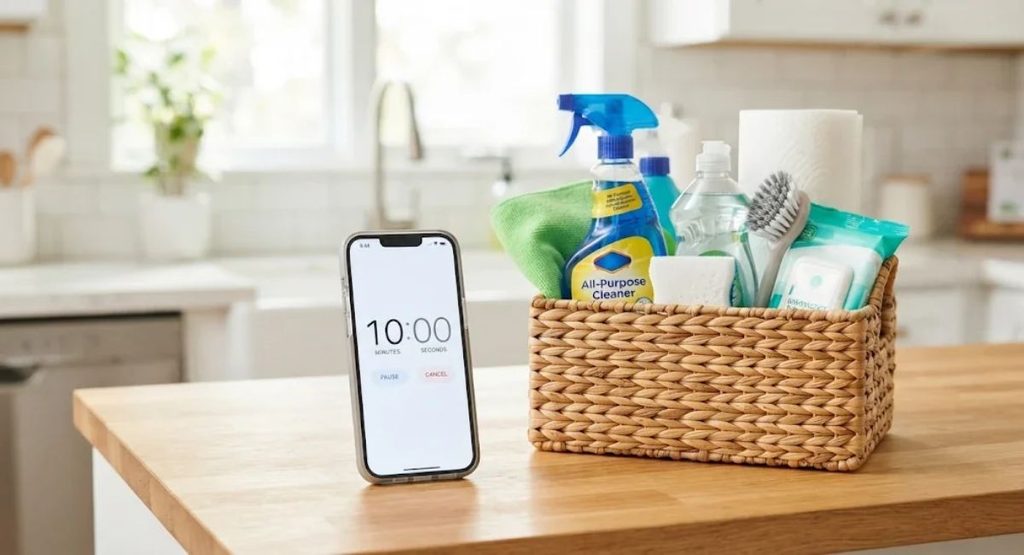
Use a timer
A timer keeps the tasks small. Set it for ten minutes. Work until it rings. Stop. This trick works well for people who feel stuck or overwhelmed. It also stops a small task from turning into a long one.
Step Three: Add a Weekly Reset
The weekly reset covers what daily tasks cannot. You can do it in one session or split it across two shorter ones.
What belongs in the weekly reset
The reset usually includes:
- Vacuuming all floors and rugs
- Mopping hard floors
- Cleaning bathrooms: toilet, sink, tub, and mirror
- Changing bed sheets and towels
- Dusting main surfaces
- Emptying all trash cans
- Wiping appliance fronts in the kitchen
These are the jobs that give a home that fresh, cared-for feel.
Pick your reset day
Choose a day when you have more time. For many households, that is Saturday or Sunday. Some families prefer a midweek reset, like Wednesday evening, to avoid weekend stress.
Pick the day and stick with it. Habits form faster with a fixed schedule.
Split the reset if needed
If ninety minutes feels like too much, split it:
- Reset A (Wednesday evening, 30 to 40 minutes): Bathrooms and trash.
- Reset B (Saturday morning, 45 to 60 minutes): Floors, bedding, and dusting.
Two shorter sessions feel lighter. They also spread the effort across the week.
Work top to bottom
Dust falls. Start with high surfaces, like shelves and ceiling fans. Then wipe mid-level surfaces. Finish with floors. This order keeps you from cleaning the same area twice.
If dust keeps coming back fast, the source may not be your cleaning method. Our guide on why your house gets dusty so quickly covers filters, textiles, and other causes.
A Sample Weekly Cleaning Plan You Can Copy
Here is a full week laid out. Adjust it to fit your own calendar.
| Day | Daily Tasks (10 to 15 min) | Focus Task |
|---|---|---|
| Monday | Dishes, counters, sweep kitchen | Declutter entryway and mail |
| Tuesday | Dishes, counters, laundry | Wipe bathroom sink, toilet, and mirror |
| Wednesday | Dishes, counters, sweep kitchen | Take out trash and recycling, wipe cans |
| Thursday | Dishes, counters, laundry | Dust living room and bedrooms |
| Friday | Dishes, counters, quick tidy | Clean fridge shelf and toss old food |
| Saturday | Dishes, counters | Weekly reset: vacuum, mop, change bedding |
| Sunday | Dishes, counters, prep for the week | Set out clothes, check the calendar |
The focus task is one small job. It takes ten to twenty minutes. Over a week, these small jobs add up to a full cleaning cycle.
If a day goes wrong, skip the focus task. Do not try to catch up the next day. Move on. The plan should bend, not break.
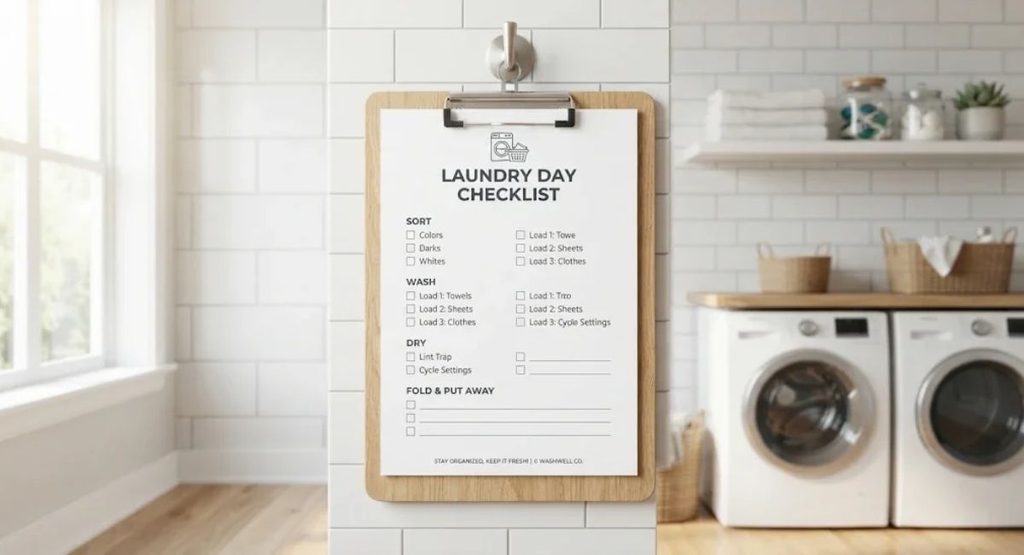
A Printable-Style Weekly Checklist
Copy this list into a notes app, print it, or tape it inside a cabinet door. Check off tasks as you go.
Every day
- Make the beds
- Load and run the dishwasher, or wash dishes
- Wipe kitchen counters and stovetop
- Sweep or spot-vacuum the kitchen and entry
- Put away items that landed in the wrong room
- Start or move one load of laundry
Twice a week
- Wipe bathroom sinks and mirrors
- Empty small trash cans
- Vacuum high-traffic rooms
- Wipe down the table and high chair
Once a week
- Clean toilets, tubs, and showers
- Vacuum all floors and rugs
- Mop hard floors
- Change bed sheets and towels
- Dust shelves, tables, and electronics
- Empty all trash and recycling
- Wipe the microwave and the fridge front
- Clean the kitchen sink
Once a month
- Wipe baseboards and door frames
- Clean the fridge shelves and toss expired food
- Dust vents and ceiling fans
- Wash the trash cans
- Vacuum upholstery and curtains
- Check HVAC filters and replace them on schedule
Every season
- Wash windows inside
- Rotate or wash pillows and comforters
- Clear and clean closets
- Deep clean the oven and the fridge
- Wipe cabinets and light fixtures
This list is a guide. Cross off what does not apply. Add what does. A list that fits your home is a list you will use.
Routines for Different Household Sizes
No single plan works for every home. A solo renter needs a different approach than a family of six. Here are adjusted versions.
| Household | Daily Time | Weekly Reset | Key Focus |
|---|---|---|---|
| One person, small space | 5 to 10 min | 30 to 45 min | Dishes, bathroom, floors |
| Couple, no kids | 10 min | 45 to 60 min | Shared task split, kitchen, bedding |
| Family with young children | 15 to 20 min | 60 to 90 min, split in two | Kitchen, toys, laundry, floors |
| Family with teens | 15 min | 60 min with shared chores | Chore rotation, bathrooms, laundry |
| Large household or multigenerational | 20 to 30 min | Two sessions of 60 min | Shared zones, trash, laundry flow |
| Home with pets | Add 5 min | Add 15 min | Fur, pet bedding, floors |
Living alone or with a partner
Smaller households can keep the routine light. Focus on dishes, bathroom care, and floors. A short daily reset plus one weekly clean may be enough.
Couples benefit from splitting tasks. One person handles the kitchen. The other handles laundry. Rotate each month to avoid resentment.
Families with young children
Young kids create fast, frequent messes. Crumbs, spills, toys, and laundry pile up. Keep daily routines tight. Do a toy reset before dinner and again before bed.
Use bins and baskets so tidying is easy. Let kids help with small jobs. A three-year-old can put toys in a bin. A five-year-old can set the table.
Families with teens
Teens can carry real tasks. Give each one a weekly zone, like a bathroom or the living room. Use a chore chart or a shared app. Clear rules help. Spell out what done looks like.
Large or multigenerational homes
More people means more mess and more hands. Assign zones. Create a rotating schedule. Make a shared calendar visible in the kitchen. Keep a clear plan for laundry, since it can take over the week.
Homes with pets
Pets add fur, dander, and litter or outdoor dirt. Add a quick daily sweep or vacuum in the pet zone. Wash pet bedding weekly. Brush pets outdoors when you can.
How to Share Chores Without the Fights
A routine works better when the load is shared. Even small children can help.
Start with a family meeting
Sit down for ten minutes. Share the plan. Ask for input. People support what they help build.
Divide by zone, not by task
Zones give clear ownership. One person owns the kitchen. Another owns the bathrooms. This avoids the “I thought you were doing it” problem.
Rotate the least favorite jobs
No one likes cleaning the toilet. Rotate it. Fairness keeps the peace.
Use visible tools
A whiteboard, a paper chart, or a shared app keeps everyone on track. Apps like Google Calendar, Cozi, and OurHome help families assign and track chores. Choose one tool and stick with it.
Keep standards clear
Say what done looks like. “Clean the bathroom” can mean many things. Spell it out: sink wiped, mirror clear, toilet cleaned, trash emptied, floor swept.
Reward consistency
Small rewards can help kids. A family movie night, a favorite meal, or extra screen time can mark a good week. For adults, a simple thank you goes a long way.
The Tools and Supplies That Make It Easier
Good supplies reduce friction. Keep them where you use them.
A basic kit
You do not need many products. A short list covers most needs:
- All-purpose cleaner
- Glass cleaner
- Bathroom cleaner
- Dish soap
- Microfiber cloths
- A sponge or scrub brush
- A mop and bucket, or a flat mop
- A vacuum with a good filter
- Trash bags
Store by zone
Put a small caddy in each bathroom with cleaner, a cloth, and a brush. Keep a spray bottle and cloth under the kitchen sink. Store a hand vacuum near the main living space. When tools are close, you use them.
Keep it simple
Skip single-use gadgets that take space. Microfiber, a good vacuum, and a few basic cleaners can do most of the work.
Know your products
Read labels. Use the right product for each surface. Never mix bleach with ammonia or vinegar. Many daily surfaces need only soap and water. Not every surface needs disinfecting.
Smart Habits That Cut Cleaning Time
The best cleaning routine includes habits that prevent mess in the first place.
Set up a landing zone
A landing zone is a spot near the door for shoes, bags, coats, and keys. Use hooks, a bench, and a basket. This keeps clutter from spreading through the house.
Take shoes off at the door
Shoes track in soil, pollen, and debris. A simple shoe-off rule cuts floor cleaning time.
Clean as you cook
Wipe spills as they happen. Fill the sink with soapy water while cooking. Rinse pans right away. This keeps the kitchen from turning into a sticky mess. For tough, set-in residue, see our guide on removing grease from kitchen backsplash.
Use a laundry rhythm
Laundry causes much of the stress in busy homes. Pick a rhythm. One load a day works for many families. Another option is one wash day per person. Fold and put away the same day to avoid mountains of clean clothes.
Reduce clutter
Less stuff means less to clean. Do a ten-minute declutter each week. Donate items you do not use. Keep flat surfaces clear.
If clutter has grown beyond what a weekly pass can handle, professional organizational help in Connecticut can set up systems so daily tidying gets easier.
Make the bed
A made bed makes a room look neat in under a minute. It is a small win that sets the tone for the day.
A Working Family of Four
Here is how a routine can play out.
A couple works full time. They have two kids, ages 6 and 9. Their house is a mix of toys, laundry, and dishes. Evenings are tight. Weekends are packed with activities.
They try the old way first. They plan a big clean every other Saturday. It rarely happens. The bathrooms get gray. The floors get gritty. Everyone feels behind.
Then they change the plan. They set a ten-minute reset after dinner. One parent loads the dishwasher. The other wipes counters. The kids put toys in bins and shoes by the door.
They start laundry before work. They fold and sort after dinner while watching a show. The kids help with socks.
They pick Wednesday evening for bathrooms and trash. The 9-year-old wipes mirrors. The 6-year-old puts away towels. One parent cleans the toilet and tub.
Saturday morning is for floors and bedding. It takes about an hour. They put on music. They finish by 10 a.m.
After a month, the house feels calmer. Nothing is perfect. Toys still appear. Dishes still wait. But the house never gets out of hand.
This result comes from steady habits, not from long hours.
When Life Gets in the Way: Flexible Backup Plans
Even the best routine hits bumps. Illness, travel, deadlines, and holidays can break the rhythm. Plan for it.
The minimum viable clean
On rough days, do only the basics:
- Dishes in the dishwasher
- Counters wiped
- Trash taken out
- One load of laundry
These four tasks take about ten minutes. They keep the home from falling apart.
The catch-up plan
If a week goes off track, do not try to redo everything. Pick the top three problem areas. Do those first. Restart your routine the next day.
The 20-minute rescue
Set a timer for twenty minutes. Clear surfaces. Start a load of laundry. Wipe the bathroom sink and toilet. Run a vacuum over the main area. This gets the house back in shape fast.
Prepare for busy seasons
Some times of year are harder: holidays, back to school, or major work deadlines. Lower your standard and shorten your list. Keep the core tasks. Skip the extras until things calm down.
Do not let guilt run the plan
A missed day is not a failure. Pick up where you left off. A routine is a tool, not a test.
Seasonal Touches That Keep the Home Fresh
Weekly routines cover the basics. A few seasonal tasks keep the home in good shape.
Spring
Open windows on mild days. Wash windows. Clean screens. Wipe baseboards. Declutter closets. Pollen and outdoor dust tend to rise, so replace HVAC filters and wipe sills more often.
Summer
Rinse out garbage cans. Clean the grill and patio furniture. Wash beach towels often. Keep a bin near the door for sandy or wet items.
Fall
Wipe down entry areas. Clean gutters if you can safely. Wash heavy blankets. Prepare the home for the heating season.
Winter
Set up boot trays and mats at the door. Salt and slush can damage floors. Wipe up melted snow right away. Dry air raises dust, so wipe surfaces often.
Seasonal tasks can feel big. Break them into small steps. Do one per week during the season.
When It Makes Sense to Bring in Professional Help
A good routine does a lot. It does not do everything. Some tasks take special tools, extra time, or both.
Consider outside help when:
- Your schedule has no room for weekly resets
- A major event is coming, such as a party or an open house
- You have fallen far behind and need a fresh start
- You are recovering from illness or surgery
- You are moving in or out
- Someone in the home needs a deeper clean for health reasons
A professional visit can handle the heavy parts. You keep up the light daily tasks. The mix saves time and reduces stress.
For a one-time reset, a professional deep cleaning in West Hartford CT reaches baseboards, grout, appliances, and corners that routines often skip. After that, your daily plan has a clean base to build on.
For steady help, recurring cleaning plans in Massachusetts can take over the weekly reset. A team arrives on a set schedule. Your own routine shrinks to a few minutes a day.
And for a general home visit, residential cleaning in Hartford CT covers kitchens, bathrooms, bedrooms, and living areas.
Many families mix methods. They handle daily tasks themselves and book a pro every two or four weeks. This blend often fits better than doing everything alone or outsourcing all of it.
Commonly Asked Questions
How long should a weekly cleaning routine take?
Daily tasks take about ten to fifteen minutes. A weekly reset takes forty-five to ninety minutes. Total time per week is roughly three to four hours for many homes, spread across seven days.
What is the best day for a weekly clean?
The best day is the one you can keep. Many households choose Saturday or Sunday. Others prefer a weeknight so weekends stay free.
How do I keep a house clean with limited time?
Focus on high-traffic rooms. Do short daily tasks. Use one weekly reset. Keep supplies close. Declutter often. Share the load.
What are the most important daily chores?
Dishes, counters, a quick floor sweep, laundry, and a reset of the main living area. These keep the home working.
How do I get kids to help?
Start small. Give clear, age-based tasks. Use a chart. Make it a shared habit. Praise effort.
Can I clean in 15 minutes a day?
Yes, for maintenance. Fifteen minutes handles the daily anchors. You will still need a weekly reset for bathrooms, floors, and bedding.
How often should I clean bathrooms?
Once a week is a good baseline. Wipe the sink and mirror twice a week if you can. If mineral spots build up on glass, see our guide on removing hard water stains from glass shower doors.
What if I fall behind?
Pick the top three problem areas. Fix those. Restart the routine. Do not try to catch up on everything at once.
Start Small and Keep It Steady
A weekly cleaning routine for a busy household does not need to be long or perfect. It needs to be simple and repeatable.
Start with the daily anchors: dishes, counters, floors, laundry, and a quick reset. Add one weekly reset for bathrooms, floors, and bedding. Use a checklist. Share the load. Adjust the plan for your household size.
Expect some bad weeks. Use a minimum plan when life gets heavy. Return to the routine as soon as you can.
This week, pick one small step. Set a ten-minute timer after dinner. Wipe the counters. Load the dishwasher. That one habit can change how the house feels.
If you want a hand, Kingdom Cleaning and More can take care of the weekly reset so your evenings stay free. Our team offers residential cleaning, deep cleaning, and recurring plans designed for busy schedules. Contact us today to set up a visit that fits your week.



Leave a Reply