

You wipe the shelves on Saturday. By Monday, a gray film is back. The TV stand looks dull. The nightstand feels gritty. It seems like you cleaned for nothing.
This is one of the most common complaints in any home. And it has real causes. Dust does not appear from thin air. It comes from specific sources inside and outside your house. It also settles faster when your air system, your fabrics, or your cleaning habits work against you.
This guide explains why your house gets dusty so quickly. You will see where household dust comes from, which habits make it worse, and what actually reduces it. You will also learn how to tell normal dust from a pattern that needs a professional look.

What Household Dust Is Actually Made Of
Most people picture dust as dead skin. That is only part of the story. Household dust is a mix of many tiny materials.
Common parts of indoor dust include:
- Skin flakes and hair from people and pets
- Fibers from clothing, bedding, towels, and carpets
- Soil and sand tracked in on shoes
- Pollen and outdoor particles that enter through doors and windows
- Pet dander and dust mite debris
- Cooking residue and soot from candles or fireplaces
The U.S. Environmental Protection Agency notes that indoor air often carries a mix of particles from both indoor and outdoor sources. You can read more in the EPA’s indoor air quality resources. The key point is simple. Your home makes dust every day, and it also lets dust in.
A typical home cannot be dust free. The goal is to slow the buildup and remove it well. When you know the sources, you can control them.
Reason 1: Your HVAC Filter Is Dirty or Wrong for Your System
Your heating and cooling system moves air through your whole house. It does this many times a day. The filter is the main barrier between that air and your rooms.
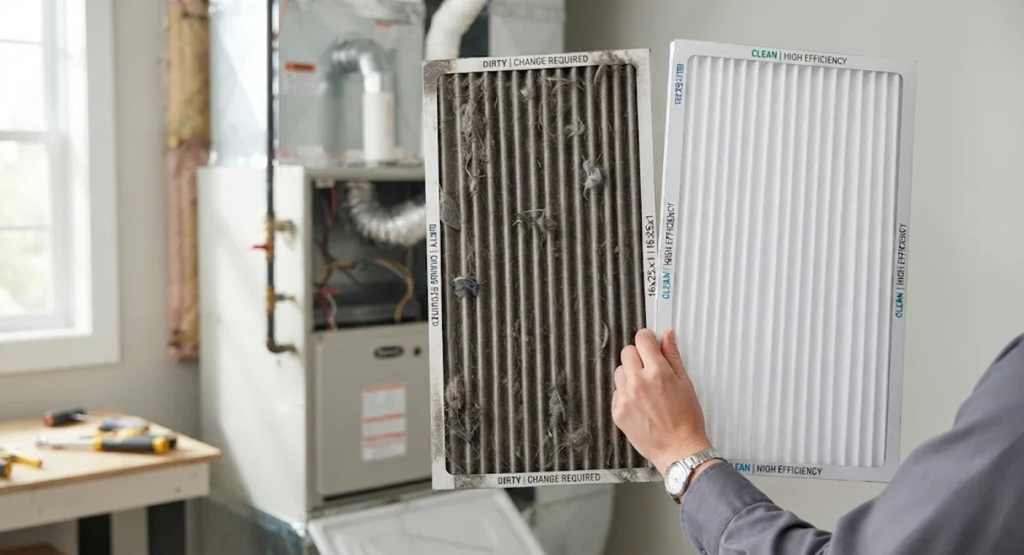
When the filter is clogged, it stops catching particles. Airflow also drops. The system then pushes dusty air back into the rooms. This is often the biggest hidden cause of fast dust buildup.
How filter ratings affect dust
Filters carry a MERV rating. MERV stands for Minimum Efficiency Reporting Value. The scale helps you compare how well filters trap particles.
- Low MERV filters, such as basic fiberglass types, catch large debris only.
- Mid-range filters, often MERV 8 to 11, catch more fine dust, pollen, and pet dander.
- Very high MERV filters can restrict airflow in some systems.
A filter that is too restrictive can strain a blower motor. A filter that is too basic lets fine dust pass. Check your system’s manual or ask an HVAC technician which range fits your equipment.
How often to change it
Many one-inch filters need a change every one to three months. Thicker media filters can last longer. Homes with pets, smokers, or allergy concerns may need changes more often.
Here is a quick habit that works. Write the install date on the filter frame. Set a phone reminder. Check it monthly during heavy heating and cooling seasons. If you can barely see light through it, replace it.
Reason 2: Leaky Ducts and Weak Ventilation
Even a clean filter cannot help if the ducts themselves are the problem. Ducts run through attics, basements, and wall cavities. Over time, seams can loosen. Joints can leak.
Leaky return ducts pull in dust from the spaces around them. Think of attic insulation fibers, basement dust, or crawlspace debris. That air then spreads through your living areas.
Signs that ducts may be contributing include:
- Dust streaks around supply vents
- Black or gray marks near registers
- Rooms that stay dusty while others stay cleaner
- Uneven heating or cooling from room to room
Ventilation matters too. A house that is sealed tight and has no fresh air exchange can trap particles. A house with many air leaks can pull in outdoor dust. Both extremes can raise indoor dust levels.
Bathroom and kitchen exhaust fans help. They remove moisture and cooking particles at the source. Run them during and after showers and cooking. Make sure they vent outdoors, not into the attic.
Reason 3: Bedding and Other Textiles Shed Constantly
Textiles are one of the largest sources of indoor dust. Every fabric in your home sheds tiny fibers. Soft items also trap particles and release them when disturbed.
Think about what a bedroom holds. Sheets, a comforter, pillows, a blanket, throw pillows, curtains, and a rug. Each one sheds and holds dust.
Bedding
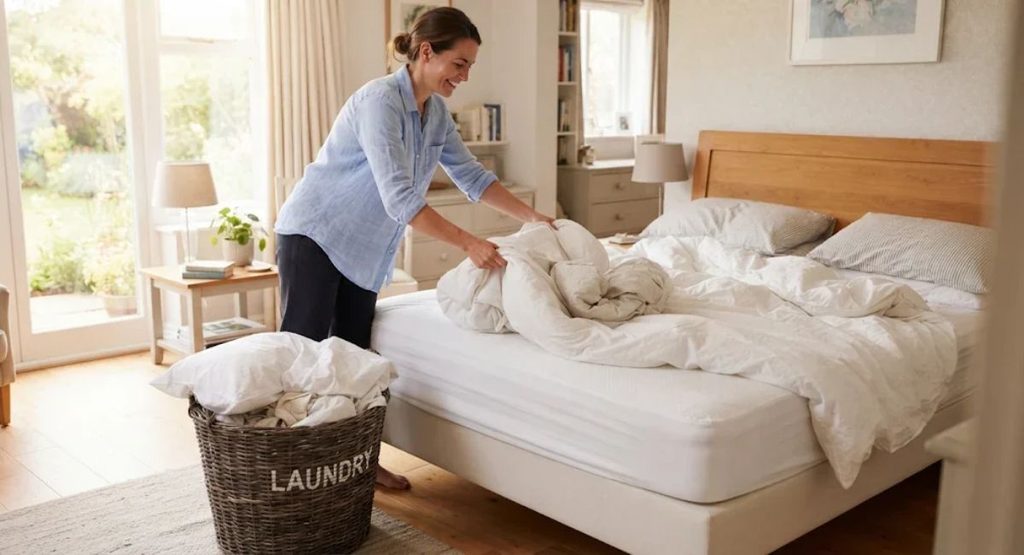
Beds collect skin cells and hair every night. A person sheds a large amount of skin daily. Much of that stays in the bedding. Dust mites feed on this material. Their waste is a common indoor allergen.
Wash sheets and pillowcases weekly in hot water if the care label allows. Wash blankets and comforters every few weeks. Use pillow and mattress covers with a tight weave. These covers block particles from building up inside.
Rugs and carpet
Carpet fibers hold dust deep down. Walking across them pushes it back into the air. Vacuum with a sealed system or a HEPA filter if you can. A vacuum with a weak filter can blow fine dust out the exhaust.
Hard floors collect dust too. It just shows up faster. Use a microfiber mop or a damp mop. Dry sweeping often pushes dust into the air.
Upholstery and throw pillows
Sofas and chairs hold dust like sponges. Pat a couch cushion on a sunny day and watch the air. Vacuum upholstery with a soft brush attachment every week or two. Wash removable covers on schedule.
Reason 4: Window Coverings and Open Windows
Window treatments catch dust all day. Heavy drapes, fabric blinds, and layered curtains trap particles. Then they release them when someone opens or closes them.
Horizontal blinds are especially tricky. Each slat holds a thin layer of dust. A quick swipe often just moves it around.
Good habits for window coverings:
- Vacuum drapes with a brush attachment every month.
- Wash curtains that are machine safe a few times a year.
- Wipe blinds with a damp microfiber cloth, one slat at a time.
- Close each blind flat, wipe one side, then flip and wipe the other.
Open windows also bring in outdoor dust. This includes pollen in spring, road dust in summer, and leaf debris in fall. If you live near a busy road or construction site, you may notice more. Use window screens in good shape. Keep windows shut on high pollen or windy days. Use your HVAC system to move air instead.
Door traffic matters as well. Every time a door opens, outside air and soil can enter. A good doormat outside and a second one inside cut down tracked-in grit.
Reason 5: Pets, People, and Daily Activity
People create dust just by living. A busy household makes more of it. Cooking, walking, dressing, and sleeping all release particles.
Pets raise the amount. Dogs and cats shed hair and dander. Dander is tiny flakes of skin. It floats easily and sticks to fabric. Even short-haired pets add to the load.
If you have pets, these steps help:
- Brush them outside when possible.
- Wash pet bedding weekly.
- Keep pets off bedroom furniture if dust or allergies are a concern.
- Vacuum more often in the rooms where they rest.
Larger households also tend to track in more dirt. Kids bring in soil, grass, and craft debris. Shoes are a major source. A simple shoe-off rule at the door can change how fast floors and furniture get dusty.
If your schedule is packed, a steady routine matters more than a perfect one.
Reason 6: Cleaning Methods That Spread Dust Instead of Removing It
This one surprises many people. You can clean often and still see dust return fast. The method may be the problem.
Dry dusting with the wrong tool
A feather duster or dry cloth often flicks dust into the air. It settles again within hours. Microfiber cloths work better. Their fibers grab and hold particles. A slightly damp microfiber cloth works even better on hard surfaces.
Starting at the bottom
Dust falls. If you clean floors first and shelves second, the shelf dust lands on a clean floor. Work from top to bottom. Start with ceiling fans, light fixtures, and high shelves. Finish with floors.
Using a poor vacuum
Vacuums with worn filters or full bags send fine particles back into the room. Check the filter. Empty the canister before it is full. Replace bags on schedule.
Skipping the edges
Baseboards, vents, and the tops of door frames hold dust for months. These spots feed the cycle. Each time air moves, some of that dust returns to the room.

Reason 7: Clutter Gives Dust More Places to Land
Dust settles on surfaces. More surfaces mean more dust. Clutter multiplies the surface area in a room.
Picture a shelf with twenty small items. Each item has its own top, edges, and gaps. Dust settles in every one. Cleaning takes longer, so it happens less often. The cycle repeats.
Open shelving, crowded decor, stacks of paper, and piles of clothing all add up. Books on open shelves collect dust along their tops. Stuffed animals hold it in their fabric.
A few changes make a visible difference:
- Store seasonal items in sealed bins.
- Use closed cabinets or glass doors for collections.
- Clear floors and under-bed areas.
- Keep fewer items on flat surfaces.
If clutter has built up, an outside hand can help. Professional organizational help clears surfaces so routine cleaning is faster and more effective. Many families find that less stuff means less dust and less stress.
Reason 8: Seasonal Changes, Renovation, and Outdoor Sources
Dust levels shift through the year. In colder months, windows stay closed. Heating systems run longer. Dry winter air makes particles stay airborne for longer. Static electricity can make dust cling to screens and furniture.
In spring, pollen and outdoor debris enter on clothes, pets, and open windows. In summer, humidity can feed dust mites. In fall, leaves and yard work add particles at the door.
Home projects have a big effect too. Sanding drywall, cutting tile, refinishing floors, or removing carpet creates very fine dust. This dust travels far. It gets into vents and settles in every room. It can linger for weeks after work ends.
If you have had recent work done, expect more dust for a while. Seal off work areas with plastic sheeting when possible. Change HVAC filters sooner than normal. Then schedule a thorough cleaning after the project ends. A professional deep cleaning in East Hartford CT reaches baseboards, vents, window tracks, and other spots that regular cleaning often skips.
Why Furniture Gets Dusty Right After Cleaning
Many people ask this exact question. You dust in the morning. By evening, a new layer is visible. Here is why that happens.
Particles are still in the air. Cleaning stirs up dust. It takes time for those particles to settle. Some land on surfaces you just wiped.
Your air system keeps adding more. A dirty filter or leaky duct feeds fresh dust into the room all day.
Soft items keep releasing particles. Pillows, throws, and curtains shed as you move them. Sitting on a sofa pushes dust into the air.
Static pulls dust back to surfaces. Electronics, glass, and plastic hold a charge. They attract fine dust quickly. A damp cloth or an anti-static cloth helps.
The light shows it. Dust may have been there before. Low sun from a window can reveal what overhead light hides. Dark furniture shows it faster than light finishes.
The fix is not to clean harder. The fix is to cut dust at the source and use better methods. Change the filter. Wash the textiles. Use damp microfiber. Work top to bottom. Wait about thirty minutes after dusting before you vacuum, so airborne particles can settle first.
How to Reduce Dust in Bedrooms
Bedrooms often get the dustiest. You spend about a third of your day there. Fabric is everywhere. Skin cells and hair collect in the room all night.
Here is a focused plan for a bedroom.
Start with the bed
Wash sheets and pillowcases weekly. Use a zippered cover on the mattress and pillows. Replace pillows every one to two years. Keep decorative pillows to a minimum.
Reduce soft surfaces
Heavy drapes, area rugs, and piles of stuffed toys all hold dust. Choose washable curtains. Use smaller rugs that go in the washer. Store plush items in a closed bin.
Clear under the bed
Under-bed space gathers dust bunnies fast. Air moves slowly there, so particles pile up. Keep it empty or use sealed storage boxes. Vacuum under the bed every week.
Watch the vents and fans
Ceiling fans spread dust that sits on the blades. Wipe each blade with a pillowcase or damp cloth. The pillowcase traps dust instead of dropping it. Wipe vent covers, too.
Keep the door closed when cleaning
Close the door while you vacuum and dust. Run the HVAC fan or a portable HEPA air purifier afterward. Open the door when the room settles.

A Simple Dust Control Routine You Can Keep
You do not need a long list. You need a steady one. Here is a practical schedule that fits most homes.
| Task | How Often | Why It Helps |
|---|---|---|
| Wipe surfaces with damp microfiber | Weekly | Removes dust instead of spreading it |
| Vacuum floors and rugs | Once or twice a week | Cuts the main source of settled dust |
| Wash sheets and pillowcases | Weekly | Removes skin cells and dust mite debris |
| Vacuum upholstery | Every two weeks | Pulls out dust trapped in fabric |
| Dust vents, fans, and baseboards | Monthly | Stops the cycle from restarting |
| Wash curtains and vacuum drapes | Every one to three months | Clears dust from window coverings |
| Replace HVAC filter | Every one to three months | Keeps air cleaner at the source |
| Deep clean the whole home | A few times a year | Reaches hidden dust in hard spots |
If your week is full, do the first four on a rotating basis. Even a short daily task works. Ten minutes in one room keeps the load down.
A regular visit from a cleaning team can lock this in. A recurring service handles the full list at steady intervals. Families who use recurring cleaning plans often notice that dust returns more slowly, because the buildup never gets a chance to pile up.
Dust Cleaning Tools That Actually Work
Good tools make a real difference. Here is what to use and why.
Microfiber cloths. The fine fibers grab particles. Use them dry for light dusting. Use them damp for hard surfaces. Wash them without fabric softener, which can coat the fibers.
A vacuum with a HEPA filter. HEPA stands for High-Efficiency Particulate Air. These filters catch very small particles. A sealed system keeps them from leaking back out.
An extendable duster with a washable head. This reaches ceiling fans and high corners. It keeps you off ladders.
A soft brush attachment. It lifts dust from upholstery, lampshades, and blinds.
A portable air purifier with a HEPA filter. It will not fix the sources. It can cut airborne particles in a bedroom or living room. Pick one sized for the room.
Humidity control. Many experts suggest keeping indoor humidity in a moderate range. Very dry air keeps dust floating. Very humid air supports dust mites and mold. A simple hygrometer shows where you are.
Ordinary Dust or a Sign of a Bigger Problem?
Most dust is normal. It is a nuisance, not a danger. But some patterns point to something deeper. Knowing the difference saves time and worry.
| What You Notice | Likely Normal | May Need a Professional Look |
|---|---|---|
| Light film returns within a few days | Yes, with regular use of the home | No |
| Heavy layer returns within a day | Sometimes after a project | Yes, if it continues with no cause |
| Dust streaks around vents | Rarely | Yes, check ducts and filters |
| Black or sooty marks near registers | No | Yes, inspect the HVAC and duct system |
| Musty smell with dust | No | Yes, check for moisture or mold |
| Rooms with different dust levels | Sometimes | Yes, if one room is far worse |
| Frequent coughing or sneezing at home | Possible allergies | Yes, talk to a doctor and consider an air quality check |
Signs that call for an inspection
Contact an HVAC professional if you notice any of these:
- Dust returns heavily within a day, even after you change the filter
- Visible dust or debris blowing from vents
- Uneven airflow, or rooms that never reach the set temperature
- Strong musty odors when the system starts
- Dark residue near supply registers
These signs can point to leaky ducts, a failing blower, a poorly fitted filter, or moisture problems. A technician can test airflow and check seals. You may also need a duct cleaning or repair. Do not guess. A professional can see what you cannot.
Contact a doctor if dust seems to trigger breathing trouble, a persistent cough, or eye and skin irritation. Dust can worsen asthma and allergies. A medical professional can guide next steps.
What a cleaning service can and cannot do
A cleaning company removes dust from surfaces, floors, vents, baseboards, and fixtures. It does not repair duct systems or diagnose mold. It does help you start from a clean baseline. That makes it easier to judge whether a dust problem is routine or abnormal.
If you want a full reset, a residential cleaning in Connecticut visit covers living areas, bedrooms, and often-missed surfaces. After that, you can track how quickly dust returns. If the pace feels unusual, it is time to call a specialist.
Room-by-Room Dust Hot Spots
Dust does not spread evenly. Some areas collect more. Knowing where to look saves effort.
Living room
TV screens, entertainment centers, and sofas collect the most. Electronics carry a static charge. Wipe screens with a clean, dry microfiber cloth. Do not use harsh sprays on them. Vacuum sofa cushions and the gaps behind them.
Kitchen
Dust mixes with cooking oil here. The result is a sticky film. It shows up on top of cabinets, fridge tops, and range hoods. Plain dusting does not remove it. Use a degreasing cleaner. See our guide on how to remove kitchen grease buildup for a clear method.
Bathroom
Bathrooms collect lint from towels and fine particles from hair products. Moisture makes it cling to fans and vents. Clean exhaust fan covers every month. If you need help with mineral film on glass, our guide on removing hard water stains from glass shower doors can help.
Entryway
This is the front line. Shoes, coats, and bags bring in soil and pollen. Use a mat outside and one inside. Keep a shoe tray. Wipe the floor often.
Home office
Computers, printers, and paper stacks collect dust. Fans pull it in. Dust inside electronics can also cause heat problems. Use compressed air carefully, away from your face, and wipe outer surfaces regularly.
A Real-World Scenario: The Dusty Condo That Stayed Dusty
Here is a common situation. A couple lives in a three-bedroom home with a dog. They dust every weekend. Within two days, the furniture looks dull again.
They check a few things. The HVAC filter is eight months old and gray. The bedroom has heavy curtains and a thick rug. The dog sleeps on the bed. The vacuum bag is full.
They make four changes. They replace the filter. They wash the curtains and switch to a smaller washable rug. They wash bedding weekly, including the dog’s blanket. They empty the vacuum on time and add a damp microfiber cloth to their routine.
Within two weeks, the dust layer slows down. It does not disappear. But the weekly wipe now takes half the time, and the air feels fresher.
This kind of result is typical when several small sources are fixed together. No single change does it all. The combination works.
When to Call for Professional Cleaning Help
DIY routines work for most homes. But some situations call for backup.
Consider professional help if:
- You have had a renovation and dust is everywhere
- You are preparing for guests, a sale, or a move
- Someone in the home has allergies and needs a deeper clean
- Your schedule leaves no time for weekly maintenance
- You have not done a deep clean in over a year
A professional team brings tools and training. They know how to remove dust without scattering it. They reach places most of us skip, like the tops of cabinets, window tracks, and vent covers.
If you are moving, a move-in and move-out cleaning in Hartford CT removes built-up dust from empty rooms, closets, and shelving before furniture goes back in.
The EPA also offers guidance on household air quality and cleaning habits. It is a trusted starting point for health-related questions about indoor air.
Frequently Asked Questions About Household Dust
Is a dusty house unhealthy?
Ordinary dust is usually not harmful. But it can irritate the nose, throat, and eyes. For people with asthma or allergies, dust and dust mites can trigger symptoms. If you have health concerns, speak with a doctor.
How often should I dust my house?
Weekly is a good baseline. Busy homes with pets or kids may need it twice a week. Focus on high-use rooms first.
Does an air purifier reduce dust?
A HEPA air purifier can reduce airborne particles in the room where it runs. It does not remove dust already on surfaces. It also does not fix the sources. Use it along with filter changes and regular cleaning.
Why is my bedroom so dusty?
Bedding, curtains, rugs, and your own skin and hair all add to it. A closed door can also trap airborne particles. Wash bedding weekly, reduce soft clutter, and vacuum often.
Do dirty air ducts cause more dust?
They can. If ducts are leaky or heavily contaminated, they can move dust into your rooms. If you see debris at vents or heavy dust right after a filter change, ask an HVAC professional to inspect the system.
Why is my house dusty even though I clean often?
Frequent cleaning does not help if the method spreads dust or the sources remain. Check your filter, switch to damp microfiber, wash your textiles, and clear clutter.
Final Thoughts: Cut the Sources, Then Clean Smarter
Fast dust has causes you can find and fix. A dirty HVAC filter, leaky ducts, shedding textiles, window coverings, pets, poor cleaning methods, clutter, and seasonal changes all play a part. Most homes have more than one.
Start with the biggest levers. Change your filter. Wash bedding weekly. Switch to damp microfiber. Work from top to bottom. Clear surfaces so dust has fewer places to land.
Then watch the pattern. Light dust that returns over several days is normal. Heavy dust within a day, dark marks at vents, musty smells, or health symptoms deserve a closer look from an HVAC or medical professional.
If you want help getting your home back to a clean baseline, Kingdom Cleaning and More can handle the work. Our team offers residential cleaning, deep cleaning, and recurring plans designed around how your household actually lives. Book a visit today and spend your weekends on something better than wiping shelves.



[…] dust keeps coming back fast, the source may not be your cleaning method. Our guide on why your house gets dusty so quickly covers filters, textiles, and other […]