
You wipe the counter on Monday. By Thursday, the sink is full, the bathroom mirror is spotted, and the bedroom floor has its own weather system of dust. Sound familiar?
Most of us clean when the mess becomes impossible to ignore. That works for a while. Then guests text that they are on the way, and you spend one frantic hour doing the work of two weeks.
A schedule fixes that. It tells you what needs attention every day, what can wait a week, and what only needs a look once a season. You stop guessing. You stop feeling behind.
This guide gives you a clear plan for each room. You will see how often to clean kitchens, bathrooms, bedrooms, living rooms, and the high-touch surfaces that move germs around your home. You will also get a realistic weekly checklist built for people with jobs, kids, pets, and limited energy.
Why Cleaning Frequency Matters More Than Cleaning Intensity
A hard scrub once a month does less than a light wipe every day. That sounds backwards, but it is true.
Dirt builds in layers. Fresh spills wipe off in seconds. Dried spills bond to the surface and need soaking, scraping, and strong products. Grease is the same. A thin film on a stovetop is easy to remove. A thick, sticky coat takes real effort.
Frequency also protects your health. The U.S. Environmental Protection Agency notes that moisture control is the key to mold control. Wet bathrooms and damp corners need regular attention for that reason. Dust, pet dander, and pollen collect in bedrooms and living rooms, which matters most for people with allergies or asthma.
Then there is the mental side. A home that stays near “good enough” feels calmer. You spend less time deciding what to do and more time living in the space.
What Happens When You Delay Routine Cleaning?
Skipping a task rarely saves time. It moves the work to later and makes it bigger.
- Soap scum hardens on shower glass and tile.
- Crumbs in the toaster and pantry attract pests.
- Dust on fan blades gets pushed around the room each time the fan runs.
- Dirty bedding holds sweat, skin cells, and oils.
A steady rhythm keeps each job small.
The Four Rules Behind Every Good Cleaning Schedule
Before the room-by-room plan, you need a few ground rules. They explain why some spaces need daily care and others do not.
Rule 1: Clean food areas the most
Anywhere food is prepared, stored, or eaten needs the highest frequency. Kitchen counters, the sink, the dining table, and the fridge handle raw food, drips, and hand contact all day.
Rule 2: Clean wet areas often
Bathrooms, laundry rooms, and the kitchen sink area stay damp. Moisture feeds mildew and bacteria. Wipe, dry, and ventilate these spaces on a regular basis.
Rule 3: Clean what hands touch
Door handles, light switches, remotes, phones, and faucet handles pick up germs fast. They are small, so cleaning them is quick. Do it more often than you think you need to.
Rule 4: Clean what you cannot see on a slower cycle
Mattresses, curtains, baseboards, and behind-appliance spaces collect dust slowly. They do not need weekly care. They do need a place on the calendar, or they never get done.
Cleaning vs. Sanitizing vs. Disinfecting
These three words get mixed up. The difference affects how often and how carefully you work.
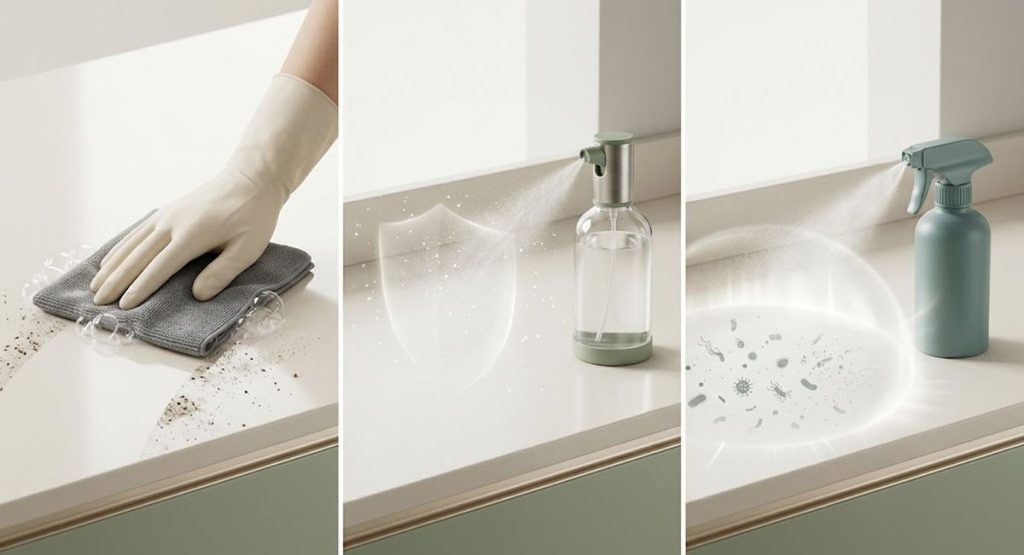
Cleaning removes dirt, dust, and grime. It uses soap or detergent and some friction.
Sanitizing lowers germs to a safer level. It matters most on food surfaces.
Disinfecting kills most germs on a surface using a product registered with the EPA. The label lists a “contact time” or “dwell time.” That is how long the surface must stay wet for the product to work. Wiping it off early defeats the purpose.
Always clean first. Dirt blocks disinfectants from reaching the surface. Then disinfect only where it counts: toilets, high-touch handles, and surfaces that touched raw meat or sick family members. You do not need to disinfect every shelf every week.
Daily Tasks That Keep the Whole House on Track
Daily work should take 15 to 20 minutes in total. Think of it as maintenance, not a project.
Here is a short daily list:
- Wash dishes or load the dishwasher.
- Wipe kitchen counters and the stovetop.
- Wipe the sink and faucet.
- Sweep high-traffic floors if crumbs are visible.
- Make beds.
- Hang towels to dry.
- Put away clutter that landed on tables and chairs.
- Take out kitchen trash if it is full or smells.
That is it. You do not need to mop, dust, or scrub. The goal is to stop small messes from spreading.
How to Keep Your Home Clean With a 10-Minute Evening Reset
Pick one “reset” time. It can be right after dinner or right before bed. Set a timer for 10 minutes. Move through the kitchen first, then the living room. When the timer ends, stop. Short, repeated resets beat one long cleaning marathon.
How Often to Clean the Kitchen
The kitchen is the hardest-working room in the house. It needs the most frequent attention.
Daily kitchen tasks
- Counters: Wipe after cooking and after meals. Use a mild all-purpose cleaner. Stone counters like granite or marble need a pH-neutral product. Acidic cleaners, including vinegar, can dull the finish.
- Sink: Rinse out food bits and wipe the basin. Wipe the faucet handles too.
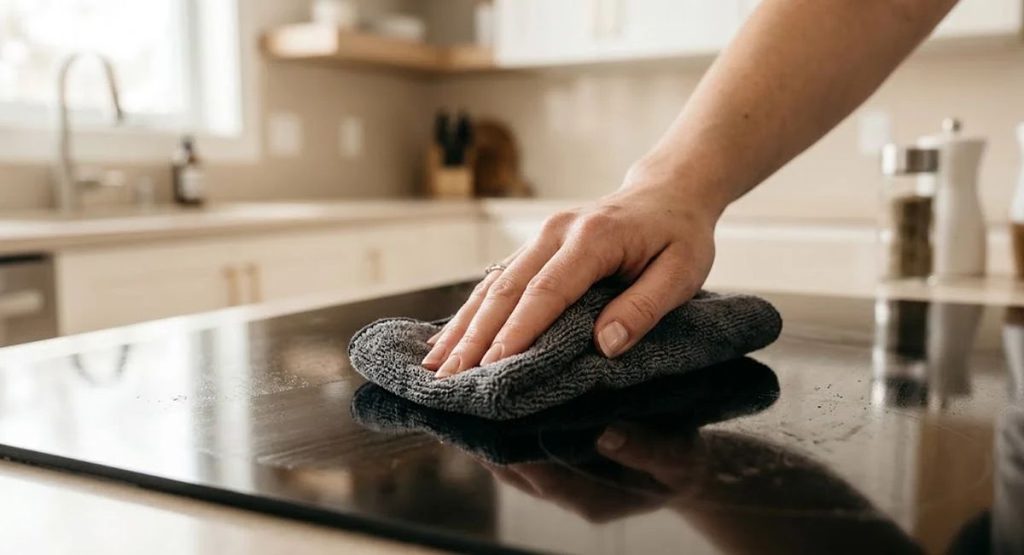
- Stovetop: Wipe spills while the surface is cool. Fresh splatter comes off easily.
- Dishes: Do not let them sit overnight. Dried food is far harder to remove.
- Dishcloths and sponges: Let them dry between uses. Damp sponges grow bacteria quickly.
Weekly kitchen tasks
- Clean the microwave inside and out. Steam a bowl of water for two minutes first. The steam loosens stuck food.
- Wipe cabinet fronts and handles, especially near the stove.
- Mop the floor.
- Clean the outside of appliances like the fridge, dishwasher, and oven.
- Empty and wash the trash can if it smells.
- Check the fridge. Toss old leftovers and wipe any sticky shelf.
- Replace or wash dish towels.
Monthly kitchen tasks
- Wipe fridge shelves and drawers.
- Run a cleaning cycle in the dishwasher. Clear the filter at the bottom.
- Clean the range hood filter. Grease builds up there and can become a fire risk.
- Wipe the inside of cabinet doors that face the stove.
- Clean the coffee maker. Mineral buildup hurts taste and performance.
- Scrub the garbage disposal with ice and a little dish soap.
Seasonal kitchen tasks
- Deep clean the oven. Follow the manufacturer’s instructions, especially if you have a self-cleaning cycle.
- Pull the fridge forward and clean behind and underneath it.
- Wash the inside of the pantry and check expiration dates.
- Clean the top of the cabinets, where grease and dust form a sticky layer.
If you cook daily, move monthly tasks closer to every two or three weeks. If you mostly order in, you can stretch them a bit.
How Often to Clean Bathrooms
Bathrooms combine moisture, skin cells, and germs. They need steady care.
Daily bathroom tasks
- Hang towels so they dry fully.
- Squeegee the shower glass or wipe walls if you want to prevent water spots.
- Run the exhaust fan during and after showers. Leave it on for about 20 minutes.
- Wipe the sink if toothpaste or hair is visible.
Daily care takes about two minutes. It also cuts how often you need to scrub.
Weekly bathroom tasks
- Toilet: Clean the bowl, seat, lid, base, and flush handle. Use a disinfectant on the seat and handle.
- Sink and counter: Wipe with a bathroom cleaner. Dry the faucet to stop spots.
- Shower and tub: Spray, let sit, then wipe. Soap scum is easier to remove when the product has time to work.
- Mirror: Use glass cleaner and a lint-free cloth.
- Floor: Sweep or vacuum, then mop.
- Trash: Empty the bin.
Monthly bathroom tasks
- Wash the shower curtain or liner. Many can go in the washing machine on a gentle cycle.
- Clean the showerhead. Soak it in a bag of cleaning solution if mineral buildup blocks the spray.
- Scrub grout lines with a stiff brush.
- Wash bath mats.
- Clean the exhaust fan cover.
- Wipe cabinet fronts and drawer pulls.
Seasonal bathroom tasks
- Clear and wipe out cabinets and drawers.
- Toss expired products.
- Replace the toothbrush holder or run it through the dishwasher.
- Check caulk around the tub and sink. Cracked or moldy caulk should be replaced.
If you share a bathroom with several people, the weekly tasks may need to happen twice a week. Kids’ bathrooms tend to need extra attention around the toilet and sink.
How Often to Clean Bedrooms
Bedrooms feel clean because they seem quiet. But you spend about a third of your life there. Skin cells, sweat, and dust gather on bedding, mattresses, and floors.
Daily bedroom tasks
- Make the bed. It takes one minute and makes the room look finished.
- Put dirty clothes in the hamper.
- Clear nightstands of cups and wrappers.
Weekly bedroom tasks
- Wash sheets and pillowcases. Weekly is the standard for most people. If you sleep with pets or sweat heavily at night, wash them even more often.
- Dust surfaces. Use a damp microfiber cloth. Dry dusting mostly moves particles into the air.
- Vacuum or mop floors. Include under the bed if you can reach.
- Empty small trash cans.
Monthly bedroom tasks
- Wash comforters, duvet covers, and mattress protectors. Check the care tag first.
- Vacuum the mattress surface. A brush attachment works well.
- Dust the ceiling fan, vents, and light fixtures.
- Wipe baseboards.
- Wash throw pillows and blankets.
- Clean the tops of dressers and bookshelves.
Seasonal bedroom tasks
- Flip or rotate the mattress if the manufacturer recommends it.
- Wash pillows, or replace them if they have lost shape.
- Wash curtains or vacuum blinds.
- Sort clothes by season. Donate what you have not worn in a year.
- Clean out the closet floor and shelves.
- Vacuum under the bed fully. Move storage bins if you use them.

How Often to Clean Living Rooms and Family Rooms
Living rooms handle daily traffic, snacks, pets, and screens. They collect more dust than most people expect.
Daily living room tasks
- Fold blankets and straighten pillows.
- Pick up cups, plates, toys, and papers.
- Spot clean spills on upholstery before they set.
Weekly living room tasks
- Vacuum floors and rugs. Go slowly. Fast passes miss fine dust.
- Vacuum upholstery. Check couch cushions for crumbs and pet hair.
- Dust surfaces. Work from top to bottom: shelves, tables, then baseboards.
- Wipe electronics. Use a dry or slightly damp microfiber cloth on screens. Never spray cleaner directly on a TV.
- Clean the coffee table. Look for rings and sticky spots.
Monthly living room tasks
- Vacuum under couch cushions and furniture.
- Dust ceiling fans, vents, and light fixtures.
- Wipe window sills and tracks.
- Dust blinds with a soft brush or a sock over your hand.
- Clean remote controls and game controllers.
- Wipe door frames and baseboards.
Seasonal living room tasks
- Wash curtains or have them cleaned.
- Deep clean rugs and upholstery. A rented carpet cleaner works for many homes.
- Move heavy furniture and clean beneath it.
- Clean windows inside.
- Wipe down books and decor on shelves.
If you have pets, vacuum twice a week. If someone in the house has allergies, a vacuum with a HEPA filter helps trap fine particles instead of blowing them back into the air.
High-Touch Surfaces: The Small Spots That Make a Big Difference
High-touch surfaces are the places hands land most often. They spread germs between family members and between rooms. They are small, so a quick wipe goes a long way.
What counts as high-touch
- Light switches
- Door handles and knobs
- Refrigerator and microwave handles
- Faucet handles
- Remote controls
- Phones and tablets
- Keyboards and mice
- Stair railings
- Cabinet pulls
- Toilet flush handles
- Car keys and bags that come into the house
How often to clean them
For a normal household, once or twice a week is a good target. Clean them more often in these cases:
- Someone in the home has a cold, flu, or stomach illness.
- A new baby or older adult lives in the house.
- You have guests staying over.
- Cold and flu season is at its peak.
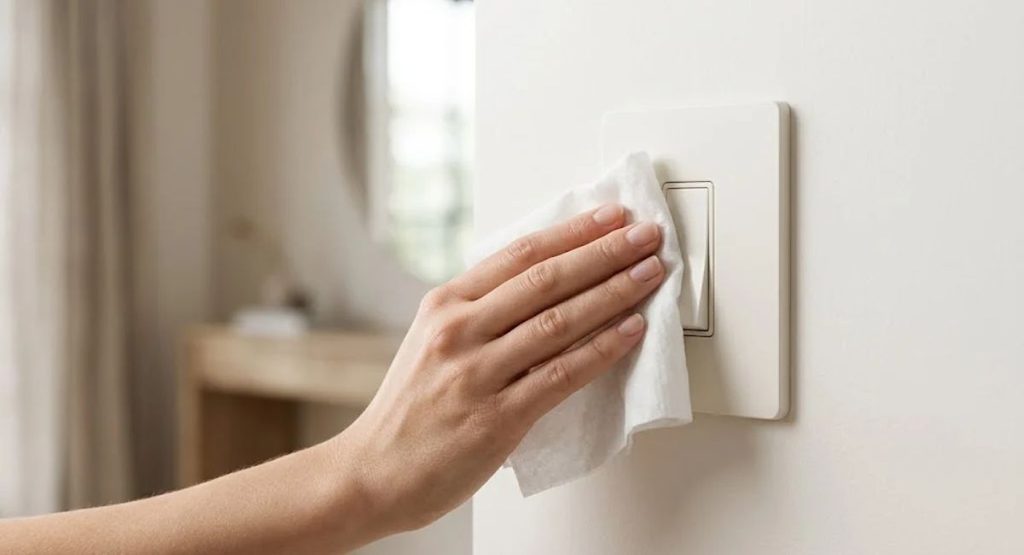
Use a disinfectant wipe or a cloth with an EPA-registered product. Follow the dwell time on the label. For phones and screens, use products made for electronics.
Entryways, Hallways, and Stairs
Dirt enters your home here first. A clean entry stops much of it from traveling deeper inside.
- Daily: Shake or sweep the doormat. Put shoes on a tray or rack.
- Weekly: Vacuum or mop the entry floor. Wipe the door handle and wall near the light switch.
- Monthly: Wash the doormat. Wipe the front door inside and out. Clean shoe racks and coat hooks.
- Seasonal: Wash walls near the door. Clean boot trays in winter, when slush, salt, and sand are tracked in.
Stairs deserve a note. Vacuum them weekly from top to bottom. Wipe the railing and spindles. Dust gathers on the edges of each step.
Laundry Room and Utility Areas
Many people forget this room. It holds lint, detergent residue, and moisture.
- Weekly: Clear the lint trap after every dryer load. Wipe the top of the washer and dryer.
- Monthly: Run a washer cleaning cycle. Wipe the rubber door seal on front-loading machines. Clean the detergent drawer.
- Seasonal: Vacuum behind and under the machines. Check the dryer vent hose for blockage. Lint buildup in vents is a known fire hazard.
Complete Room-by-Room Cleaning Frequency Chart
Here is a quick view of the full plan. Use it as a reference you can print and keep on the fridge.
| Room or Area | Daily | Weekly | Monthly | Seasonal |
| Kitchen | Counters, sink, stovetop, dishes | Floors, microwave, cabinet fronts, fridge check | Fridge shelves, dishwasher filter, range hood filter | Oven, behind fridge, pantry |
| Bathrooms | Dry towels, fan on, quick sink wipe | Toilet, shower, mirror, floor | Shower curtain, showerhead, grout, fan cover | Cabinets, caulk check |
| Bedrooms | Make bed, clear nightstand | Sheets, dust, floor | Comforter, mattress vacuum, fan and vents | Pillows, curtains, closet |
| Living Room | Fold blankets, clear clutter | Vacuum, dust, electronics | Under cushions, blinds, remotes | Rugs, windows, curtains |
| High-Touch Surfaces | Handles if someone is ill | Switches, handles, remotes | Phones, keyboards, railings | Full wipe of all handles and fixtures |
| Entryway | Shake mat | Floor, door handle | Wash mat, wipe door | Walls, boot trays |
| Laundry Area | Lint trap | Wipe machines | Washer cleaning cycle | Behind machines, dryer vent |
Weekly House Cleaning Schedule for Busy Households
A table of tasks is helpful. A plan you will actually follow is better. Here is one built around real schedules.
The idea is simple. Do the daily tasks every day. Then give each weekday one focus. Each focus takes 20 to 30 minutes. Weekends stay light.
| Day | Focus | Time |
| Monday | Bathrooms: toilet, sink, mirror, floor | 25 minutes |
| Tuesday | Kitchen deep wipe: microwave, cabinets, fridge check | 25 minutes |
| Wednesday | Bedrooms: dust, vacuum, empty trash | 25 minutes |
| Thursday | Living room: vacuum, dust, electronics | 25 minutes |
| Friday | Floors: mop kitchen and bathrooms, wipe entry | 20 minutes |
| Saturday | Laundry and sheets: wash and remake beds | Light, mostly hands-off |
| Sunday | Rest. Do the daily reset only. | 10 minutes |
How to make this plan work
- Start small. If 25 minutes feels like too much, cut it to 15. Keep the habit first.
- Play music or a podcast. It makes the time pass faster.
- Share the work. Assign kids age-appropriate jobs. Younger children can fold towels or wipe low surfaces. Teens can handle bathrooms or vacuuming.
- Keep supplies close. Put a small caddy in each bathroom. Store a spray bottle and cloth under the kitchen sink. Fewer trips means less friction.
- Skip a day without guilt. If Wednesday falls apart, move bedrooms to Thursday. The point is rhythm, not perfection.
How to Maintain Essential Cleaning Tasks During Busy Weeks
Illness, travel, and deadlines will happen. In those weeks, cut down to a minimum set:
- Dishes and counters
- Toilet and sink
- Trash and recycling
- Bed linens if someone is sick
Resume the full plan when things calm down.
Monthly Home Cleaning Tasks Worth Putting on a Calendar
Some tasks do not fit into weekly slots. They are easy to forget. Set a recurring reminder on your phone for the first Saturday of each month and work through a short list.
- Wash comforters and throw blankets.
- Dust fans, vents, and light fixtures.
- Vacuum mattresses.
- Clean the dishwasher and washing machine.
- Wipe baseboards.
- Wash bath mats and doormats.
- Clean the showerhead.
- Wipe fridge shelves.
- Clean window sills and tracks.
- Wipe cabinet fronts throughout the home.
You do not need to do all of these in one day. Spread them across the four weekends, or pair two or three with the weekly focus days.
Seasonal Cleaning: What Changes With the Weather
Seasonal cleaning is where most schedules fall apart. The tasks are bigger and the payoff is less obvious. But the right timing makes the work easier.
Spring
Spring is the classic season for a deeper reset. Windows have been closed for months. Pollen starts to arrive.
- Wash windows inside and out.
- Clean screens and tracks.
- Launder curtains.
- Deep clean carpets and rugs.
- Wipe walls and doors.
- Clean out closets and donate extra items.
- Dust high shelves and tops of cabinets.
Summer
Summer brings humidity, open doors, and more guests.
- Check bathrooms and basements for damp spots or musty smells.
- Run fans and dehumidifiers where needed.
- Clean the grill and patio furniture.
- Wipe door tracks that collect sand and dirt.
- Vacuum entryways more often.
Fall
Fall is the time to prepare for months indoors.
- Vacuum under beds and furniture.
- Wash heavier bedding.
- Clean the fireplace and chimney area if you use it. Have the chimney inspected by a qualified person.
- Wipe baseboards and heating vents before the heat comes on.
- Clean entryway storage as boots and coats come out.
- Check weatherstripping around doors.
Winter
Winter means salt, slush, dry air, and closed windows.
- Clean entry floors often. Salt leaves white marks on hardwood, tile, and carpet.
- Dust more frequently, since dry indoor air keeps particles floating longer.
- Wash hand towels and kitchen towels more often during cold and flu season.
- Disinfect high-touch surfaces more often.
- Run a humidifier carefully. Clean it on schedule to avoid mold and bacteria.
Adjusting the Schedule for Your Household
A single plan cannot fit every home. Use the schedule above as a baseline. Then adjust.
If you have pets
- Vacuum high-traffic areas two to three times a week.
- Wash pet bedding weekly.
- Wipe paws at the door.
- Clean food and water bowls daily.
- Brush pets outside when possible.
If you have young children
- Wipe high chairs and kitchen tables after each meal.
- Disinfect toys that go into mouths on a regular basis.
- Clean bathroom sinks and toilets more often.
- Vacuum under the dining table daily if crumbs build up.
If someone has allergies or asthma
- Wash bedding at least weekly in hot water if the fabric allows it.
- Use a HEPA vacuum.
- Damp dust instead of dry dust.
- Keep windows closed during high pollen days.
- Replace HVAC filters on the recommended schedule, usually every one to three months.
If you live in a small space
- Smaller rooms get dirty at a similar rate, but each task takes less time.
- Do tasks more often and in shorter bursts.
- Keep clutter low. Clutter slows every cleaning task.
If you work from home
- Add a quick wipe of your desk, keyboard, and mouse each week.
- Clean the kitchen more often, since you will use it for more meals.
- Run through the bathroom twice a week if it sees more use.
Common Cleaning Schedule Mistakes
Even with a good plan, a few habits can slow you down or waste effort.
Cleaning in the wrong order
Always work from top to bottom. Dust shelves before vacuuming. Wipe counters before mopping. Otherwise, you drop dirt onto areas you just cleaned.
Using too much product
More cleaner does not mean cleaner surfaces. Extra product leaves residue, which attracts dirt. Follow label directions.
Mixing chemicals
Never mix bleach with ammonia, vinegar, or other cleaners. Dangerous fumes can form. Use one product at a time and rinse between products.
Skipping the dwell time
Disinfectants need contact time. Spray, wait, then wipe. If the label says four minutes, wait four minutes.
Using dirty tools
A dirty mop spreads grime. A gritty sponge scratches surfaces. Wash microfiber cloths after each use, and replace sponges every one to two weeks.
Trying to do everything at once
A big cleaning day feels productive. It also burns people out. Small, steady sessions last longer.
Ignoring ventilation
Open a window or run the fan when you clean. Fresh air removes fumes and speeds drying.
Essential Cleaning Tools for an Efficient Home Cleaning Routine
The right tools cut time and effort. You do not need a closet full of gadgets. A short list covers most jobs.
- Microfiber cloths: They trap dust and absorb liquid. Keep a stack and wash them often.
- A vacuum with a HEPA filter and attachments: It handles floors, upholstery, and vents.
- A flat mop with washable pads: It works faster than a bucket mop for daily and weekly floors.
- An all-purpose cleaner: Good for most hard surfaces.
- A bathroom cleaner: Made to cut soap scum and mineral deposits.
- A glass cleaner: For mirrors and windows.
- An EPA-registered disinfectant: For toilets, handles, and sick-day cleanup.
- A toilet brush and caddy: Basic, but essential.
- A squeegee: Keeps shower glass clear with almost no effort.
- A stiff grout brush: For monthly tile care.
- A long-handled duster: Reaches fans and high corners.
- Rubber gloves: Protect your hands.
Keep supplies where you use them. A small basket in each bathroom and one in the kitchen reduces trips and delays.
When to Consider Professional Deep Cleaning Services
Keeping your home clean takes time and effort. Daily chores can become difficult when life gets busy. A new baby, long work hours, an injury, or family responsibilities can leave little time for cleaning.
That is when professional cleaners can help. Cleaning services in Hartford CT can take care of demanding household tasks. They help you enjoy a clean home without spending all your free time on chores.
When Regular Cleaning Is Not Enough
Regular cleaning keeps your home tidy. But some areas need extra attention. Oven grease, bathroom stains, dirty grout, and built-up dust can be hard to remove.
A professional deep cleaning service tackles these problem areas. It reaches the spots that regular cleaning often misses. Massachusetts deep cleaning services can help refresh your home and restore a cleaner, healthier living space.
Signs You Need a Deep Cleaning Service
Not sure when to book a deep clean? Look for these common signs:
- Stubborn dirt: Grease, stains, and grime keep building up.
- Dusty areas: Baseboards, ceiling fans, and corners need attention.
- Busy schedules: You struggle to find time for household chores.
- Seasonal buildup: Your home needs a fresh start after months of regular use.
- Special occasions: You want your home ready for guests or family gatherings.
A professional deep clean can handle these tasks and make your home feel fresh again.
Keep Your Luxury Home Clean and Comfortable
Large homes need regular care. They often have more rooms, bathrooms, floors, and surfaces to maintain. Some materials also need special attention.
Homeowners looking for Luxury Home Cleaning in Simsbury CT can benefit from professional cleaning support. Expert cleaners can care for kitchens, bathrooms, living rooms, and other spaces.
They focus on the details that keep your home looking its best. You can enjoy a clean and comfortable space without handling every task yourself.
Make Home Maintenance Easier With Recurring Cleaning
A one-time deep clean gives your home a fresh start. Regular cleaning helps maintain those results.
Recurring cleaning plans offer a simple way to keep your home tidy. You can choose weekly, biweekly, or monthly visits based on your needs.
These services may include:
- Dusting furniture and surfaces.
- Vacuuming carpets and rugs.
- Mopping hard floors.
- Cleaning kitchen counters.
- Wiping bathroom fixtures.
- Emptying trash bins.
- Cleaning common areas.
A regular schedule keeps dirt from building up. It also gives you more time for work, family, and personal activities.
Find the Right Cleaning Service for Your Home
Every home has different cleaning needs. Some homeowners need a one-time deep clean. Others want regular help with everyday chores.
Whether you need Cleaning services in Hartford CT, Massachusetts Deep Cleaning Services, or Luxury Home Cleaning in Simsbury CT, professional help can make a difference.
Start with a one-time deep cleaning service to refresh your home. Choose a recurring cleaning plan in CT & MA if you want ongoing support. You can also explore all available cleaning services across connecticut and MA to find the right option.
A clean home feels more welcoming and comfortable. Let professional cleaners handle the hard work so you can enjoy more free time.
Frequently Asked Questions About Cleaning Frequency
How often should you clean your house overall?
Do light daily tasks every day. Do a full round of room cleaning once a week. Add monthly and seasonal tasks on a calendar. This mix keeps most homes in good shape without long, exhausting sessions.
How often should you clean the bathroom?
Clean toilets, sinks, and showers once a week. Wipe sinks and dry towels daily. In busy or shared bathrooms, clean twice a week.
How often should you wash bed sheets?
Once a week works for most people. Wash more often if you sweat at night, sleep with pets, or deal with allergies.
How often should you vacuum?
Vacuum high-traffic areas once or twice a week. Vacuum bedrooms and low-traffic rooms weekly. Increase to two or three times a week if you have pets or someone with allergies.
How often should you clean the kitchen?
Wipe counters, the sink, and the stovetop every day. Mop, clean appliances, and check the fridge weekly. Handle deeper tasks monthly and seasonally.
How often should you disinfect high-touch surfaces?
Once or twice a week in a normal household. Do it daily when someone is sick or during peak cold and flu season.
How often should you deep clean your home?
Plan on deep cleaning every three to six months. Do it sooner if you notice heavy buildup, odors, or after a major life event like a move or renovation.
Do you need to clean every room every week?
Not every room needs full attention weekly. Kitchens and bathrooms do. Guest rooms and rarely used spaces can wait two weeks or even a month, with only light dusting.
What is the fastest way to keep a house clean?
Do small tasks every day and stick to a short weekly rotation. A 15 minute evening reset and one focus room per weekday keeps buildup from forming.
How to Create and Maintain a Consistent Home Cleaning Schedule
Cleaning a home well is less about effort and more about timing. A short daily reset keeps surfaces clear. A weekly rotation covers the main rooms. Monthly and seasonal tasks handle the slow dust and buildup you do not see until it is thick.
Start with what hurts most. If the kitchen feels out of control, begin there. If bathrooms bother you most, take that first. Add one new habit every week until the whole plan fits into your life.
Print the table, tape it inside a cabinet door, and check off tasks as you go. Adjust for pets, kids, allergies, and work schedules. Keep the plan flexible.
If your schedule gets too full or a room needs more than routine care, Kingdom Cleaning and More is here to help. Visit our cleaning ervices page to see which options match your home and your calendar.
Leave a Reply